
Life Insurance
Do You Have to Have Homeowners Insurance?


Buying a home is one of the biggest financial decisions you’ll ever make. Naturally, many buyers ask: do you have to have homeowners insurance? The short answer is no it’s not legally required in most states but in practice, most homeowners must carry it due to mortgage requirements and financial risk exposure.
If you’re purchasing a home, refinancing, paying off your mortgage, or considering canceling your policy, this in-depth guide explains exactly when homeowners insurance is required, when it’s optional, and why dropping it can be financially dangerous.
Do You Have to Have Homeowners Insurance?
Homeowners insurance is not legally required in most states. However, if you have a mortgage, your lender will require you to maintain coverage until the loan is paid off. If you own your home outright, insurance is optional but going without it exposes you to major financial risk.
read How Much Life Insurance Do I Need?
Why Homeowners Insurance Exists in the First Place
Homeowners insurance is a risk transfer tool. Instead of personally absorbing catastrophic loss, you pay a relatively small premium to an insurance company in exchange for financial protection.
It protects against:
- Fire and smoke damage
- Windstorms and hail
- Theft and vandalism
- Certain types of water damage
- Liability lawsuits
- Loss of use (temporary housing)
Without insurance, these losses come directly from your savings, investments, or future income.
Is Homeowners Insurance Required by Law?
Federal Law
There is no federal law that requires homeowners insurance.
State Law
In most states, homeowners insurance is not legally mandated. However:
- Some states require specific coverage if you live in high-risk zones (such as flood insurance in designated FEMA flood zones if you have a mortgage).
- Some homeowner associations (HOAs) require certain coverage levels.
The Key Difference
There’s a major distinction between:
- Legal requirement
- Lender requirement
- Financial necessity
Most homeowners fall into the second category.
If You Have a Mortgage, You Must Have Homeowners Insurance
If you financed your home, your lender requires coverage.
Why Lenders Require It
The lender has collateral your home. If the home is damaged or destroyed, they need assurance that:
- The property can be rebuilt
- The loan can still be repaid
- The value of the asset is protected
Without insurance, both you and the lender face significant financial risk.
What Lenders Typically Require
Most mortgage agreements require:
- Coverage equal to at least the loan balance or replacement cost
- Proof of insurance before closing
- Continuous coverage for the life of the loan
- The lender listed as a mortgagee on the policy
If your policy lapses, the lender can:
- Purchase force-placed insurance
- Add the premium to your mortgage payment
- Escalate compliance issues
Force-placed insurance is usually more expensive and offers less protection for you.
What If You Pay Off Your Mortgage?
Once your mortgage is paid in full, the lender can no longer require coverage.
At that point, the decision becomes yours.
Should You Cancel It?
Consider these factors:
- Could you afford to rebuild your home from scratch?
- Could you absorb a $300,000+ loss without debt?
- Could you survive a liability lawsuit?
- Do you have substantial liquid assets?
For most homeowners, the answer to at least one of those questions is no.
Financial Risk Analysis: What Happens Without Insurance?
Let’s examine real-world risk exposure.
Scenario 1: Total Loss Fire
- Home value: $450,000
- Rebuild cost: $380,000
- Personal property loss: $120,000
Without insurance, total exposure: $500,000+
Scenario 2: Liability Lawsuit
A guest slips on icy stairs and suffers severe injury.
- Medical costs
- Legal defense fees
- Settlement or court judgment
Liability claims can easily exceed six figures.
Without insurance, your personal assets are at risk.
What Does Standard Homeowners Insurance Cover?
A standard HO-3 policy includes:
1. Dwelling Coverage
Covers the structure itself walls, roof, foundation.
2. Other Structures
Detached garage, shed, fence.
3. Personal Property
Furniture, electronics, appliances, clothing.
4. Loss of Use (Additional Living Expenses)
Pays for hotel stays and meals if your home becomes uninhabitable.
5. Personal Liability
Protects against lawsuits for injuries or property damage.
6. Medical Payments
Covers small medical claims regardless of fault.
What Homeowners Insurance Does NOT Cover
Even if required by your lender, policies have exclusions.
Common exclusions include:
- Flood damage (requires separate flood insurance)
- Earthquake damage (separate endorsement)
- Sewer backups (optional add-on)
- Maintenance-related damage
- Mold caused by neglect
If you live in coastal, wildfire, or flood-prone areas, additional coverage may be essential.
How Much Homeowners Insurance Should You Carry?
Step-by-Step Protection Framework
Step 1: Calculate Replacement Cost
Do not rely on market value.
Replacement cost is what it takes to rebuild with similar materials at today’s prices.
Step 2: Inventory Your Belongings
- Photograph rooms
- Document serial numbers
- Store records digitally
Step 3: Assess Liability Exposure
If you have:
- Significant savings
- Investments
- Rental properties
- Teen drivers
- A swimming pool
Consider higher liability limits or an umbrella policy.
Step 4: Evaluate Deductible Strategy
Higher deductible = lower premium
But ensure you can afford the deductible comfortably.
When Might Someone Intentionally Go Without Insurance?
Though rare and risky, some homeowners drop coverage when:
- The home is very low value
- It’s scheduled for demolition
- They are investors managing multiple properties
- They have significant self-insurance reserves
Even then, liability coverage alone is often worth maintaining.
Cost of Homeowners Insurance
Premiums vary based on:
- Location and weather risk
- Home age and condition
- Roof type
- Claims history
- Coverage limits
- Deductible amount
In high-risk areas (wildfire zones, coastal regions), premiums have risen significantly in recent years.
Climate Change and Insurance Availability
An emerging issue in the homeowners insurance market is availability.
Some insurers have:
- Reduced coverage in wildfire-prone states
- Increased deductibles in hurricane zones
- Limited new policies in high-risk regions
This makes maintaining coverage even more critical while it’s available.
Common Mistakes Homeowners Make
- Canceling coverage immediately after mortgage payoff
- Underinsuring to lower premiums
- Forgetting to update policy after renovations
- Ignoring flood risk
- Failing to shop rates every few years
Insurance isn’t something to “set and forget.”
Is Homeowners Insurance Worth It?
Insurance protects against catastrophic, unpredictable losses.
Most homeowners cannot:
- Rebuild a destroyed home from savings
- Pay six-figure liability judgments
- Cover temporary living expenses for months
For the vast majority of households, homeowners insurance is not just worth it it’s financially essential.
Frequently Asked Questions
1. Do you have to have homeowners insurance if you own the house outright?
No, it is not legally required. However, without it you assume full financial responsibility for structural damage, theft, and liability claims.
2. Can a mortgage company force you to get insurance?
Yes. Mortgage lenders require coverage and can impose force-placed insurance if your policy lapses.
3. Is homeowners insurance required at closing?
Yes, if you are financing the home. Lenders require proof of insurance before funding the loan.
4. What happens if I let my homeowners insurance lapse?
If you have a mortgage, the lender may purchase force-placed coverage at a higher cost. If you own the home outright, you assume full financial risk.
5. Do you need homeowners insurance for a condo?
Condo owners typically need an HO-6 policy covering interior structures and personal property, even though the HOA carries master coverage.
6. Does homeowners insurance cover natural disasters?
Fire and windstorms are usually covered. Floods and earthquakes typically require separate policies.
7. Can I just insure the structure and skip personal property?
Some policies allow adjustments, but eliminating personal property coverage significantly increases your financial exposure.
8. How often should I review my policy?
At least once per year or after renovations, major purchases, or life changes.
Do You Have to Have Homeowners Insurance?
So, do you have to have homeowners insurance?
- By law? Usually no.
- With a mortgage? Yes.
- For financial protection? Almost certainly.
Homeowners insurance isn’t about checking a box for your lender it’s about protecting your home, your assets, and your long-term financial stability.
Before canceling or reducing coverage, carefully evaluate your risk tolerance and ability to absorb major losses.
Employment-related lawsuits are rising across industries and even one claim can cost a business tens or hundreds of thousands of dollars in legal defense alone. That’s where epli insurance (Employment Practices Liability Insurance) becomes critical.
Whether you’re a startup founder, HR leader, or small business owner, understanding how this coverage works can protect your company’s financial stability and reputation.
This comprehensive guide explains what EPLI insurance is, what it covers, how much it costs, and how to choose the right policy aligned with what business decision-makers are actively searching for.
read How Much Does Life Insurance Cost in 2024? (Real Rates & Saving Tips)
What Is EPLI Insurance?
EPLI insurance (Employment Practices Liability Insurance) protects businesses against claims made by employees, former employees, or job applicants alleging wrongful employment practices.
These claims commonly involve:
- Wrongful termination
- Discrimination (age, race, gender, disability, religion)
- Sexual harassment
- Retaliation
- Failure to promote
- Breach of employment contract
- Mismanagement of employee benefits
EPLI insurance is a business liability policy that covers legal defense costs, settlements, and judgments related to employee claims such as discrimination, harassment, wrongful termination, or retaliation. It protects employers from financially devastating workplace lawsuits that are typically not covered under general liability insurance.
read How Much Life Insurance Do You Actually Need? (Calculator + Tips)
Why EPLI Insurance Matters More Than Ever
Employment law has become increasingly complex. Federal laws like Title VII, ADA, ADEA, and FMLA along with evolving state and local regulations create compliance risks for even well-intentioned employers.
Key Risk Factors Driving Claims
- Increased employee awareness of workplace rights
- Remote and hybrid workforce management issues
- Social media amplification of workplace disputes
- Stricter state-level labor laws
- Economic downturn layoffs
Even companies with strong HR policies can face allegations. Defense costs alone even if you win can be substantial.
read Is BiBERK Insurance Legit?
Without EPLI coverage, businesses typically pay these expenses out of pocket.
What Does EPLI Insurance Cover?
Coverage varies by carrier and policy form, but most standard EPLI policies include:
1. Legal Defense Costs
Attorney fees, court costs, and related legal expenses often the most expensive part of a claim.
2. Settlements and Judgments
Financial compensation awarded to plaintiffs.
3. Administrative Proceedings
Coverage for EEOC (Equal Employment Opportunity Commission) investigations or similar state agency actions.
4. Third-Party Coverage (Optional)
Some policies extend protection to claims from customers or vendors alleging harassment or discrimination.
What EPLI Insurance Does NOT Cover
Understanding exclusions is equally important.
Common exclusions include:
- Criminal acts
- Intentional fraud
- Bodily injury or property damage (covered under general liability)
- Workers’ compensation claims
- Wage and hour violations (often excluded or require endorsement)
Important: Wage & Hour Claims
Wage and hour disputes (unpaid overtime, misclassification) are frequently excluded or sub-limited. These claims are increasingly common and expensive.
If this risk applies to your workforce structure, you may need specialized coverage extensions.
Who Needs EPLI Insurance?
Any business with employees faces exposure regardless of size.
Small Businesses (5–50 Employees)
Often the most vulnerable because:
- Limited HR infrastructure
- Informal documentation processes
- Budget constraints for legal defense
Mid-Sized Companies
Higher employee counts increase claim probability.
Startups & Tech Companies
High growth, rapid hiring, and remote teams increase risk exposure.
High-Risk Industries
- Healthcare
- Hospitality
- Retail
- Financial services
- Construction
Even nonprofits and educational institutions commonly carry EPLI.
How Much Does EPLI Insurance Cost?
Pricing depends on several underwriting factors:
- Number of employees
- Industry risk profile
- Claims history
- Turnover rate
- HR policies and training programs
- Geographic location
Typical Premium Ranges
- Small businesses: $800–$3,000 per year
- Mid-sized businesses: $3,000–$15,000+ annually
- Larger enterprises: Significantly higher based on exposure
Policies typically have deductibles (retentions) ranging from $5,000 to $50,000+.
Claims-Made vs. Occurrence Policies
Most EPLI policies are claims-made.
What This Means
The policy must be active both:
- When the alleged incident occurred
- When the claim is filed
This makes retroactive dates and tail coverage critically important when switching insurers.
Real-World Example: Why EPLI Is Essential
A 25-employee marketing firm terminates a manager for performance issues. The former employee alleges age discrimination and files a complaint with the EEOC.
Even if the claim lacks merit:
- Legal defense costs: $60,000
- Mediation expenses: $15,000
- Settlement: $40,000
Total exposure: $115,000+
EPLI insurance could cover most of these costs, subject to deductible.
Key Components of a Strong EPLI Policy
When comparing policies, evaluate:
1. Defense Within vs. Outside Limits
If defense costs are inside limits, legal fees reduce the total coverage available for settlements.
2. Consent-to-Settle Clause
Gives you control over settlement decisions.
3. Third-Party Liability
Important for client-facing industries.
4. Wage & Hour Sublimits
Critical for labor-intensive sectors.
5. Prior Acts Coverage
Ensures protection for past employment decisions.
Step-by-Step Framework: How to Choose the Right EPLI Insurance
Step 1: Conduct an Internal Risk Audit
- Review HR documentation
- Evaluate complaint procedures
- Assess termination processes
Step 2: Analyze Workforce Risk
- High turnover?
- Remote workforce?
- Seasonal employees?
Step 3: Compare Carriers Carefully
Focus on:
- Coverage breadth
- Claims handling reputation
- Policy exclusions
Step 4: Integrate Risk Management Support
Many insurers offer:
- HR hotlines
- Compliance training
- Policy templates
These tools reduce claims frequency.
Common Mistakes Businesses Make
- Assuming general liability covers employee lawsuits
- Choosing lowest premium over strongest coverage
- Ignoring wage & hour exposure
- Failing to document HR processes
- Switching insurers without maintaining retroactive coverage
Risk Reduction Best Practices
EPLI insurance is reactive protection. Proactive risk management lowers premiums and claim frequency.
Implement These Controls:
- Written employee handbook
- Consistent performance documentation
- Anti-harassment training
- Clear complaint escalation process
- Legal review of termination decisions
Insurers often provide premium credits for documented HR compliance programs.
EPLI Insurance vs. Other Business Policies
| Policy Type | Covers Employment Claims? |
| General Liability | ❌ No |
| Workers’ Compensation | ❌ No |
| Directors & Officers (D&O) | ⚠️ Sometimes limited |
| EPLI Insurance | ✅ Yes |
While D&O may overlap in certain management claims, EPLI is specifically designed for employment-related allegations.
Emerging Trends in EPLI Insurance
1. Increased Retaliation Claims
Retaliation claims often accompany discrimination allegations.
2. Remote Work Liability
Virtual harassment and digital communication evidence complicate claims.
3. Social Inflation
Higher jury awards are driving increased policy limits.
4. DEI-Related Litigation
Diversity initiatives can create reverse discrimination allegations if poorly structured.
How Much Coverage Limit Do You Need?
General guidelines:
- Small businesses: $1 million limit
- Mid-sized companies: $2–5 million
- Larger organizations: $5 million+
However, limit adequacy depends on:
- Revenue
- Employee count
- Litigation environment in your state
Consulting a specialized commercial insurance broker is strongly recommended.
Frequently Asked Questions
1. Is EPLI insurance required by law?
No, EPLI insurance is not legally required. However, businesses with employees face significant legal risk, making it a highly recommended coverage for financial protection.
2. Does EPLI insurance cover independent contractors?
Usually not automatically. Some policies can extend coverage to contractors, but it depends on policy wording and endorsements.
3. Can EPLI insurance cover wage and hour lawsuits?
Standard policies often exclude wage and hour claims or offer limited sublimits. Employers should review endorsements carefully if overtime or classification risk exists.
4. How long does EPLI insurance cover past incidents?
Coverage applies to claims made during the policy period, subject to the retroactive date. Prior acts coverage protects incidents that occurred before the policy start date.
5. What is the average deductible for EPLI insurance?
Deductibles typically range from $5,000 to $50,000, depending on company size, claims history, and risk profile.
6. Do startups need EPLI insurance?
Yes. Startups often face higher employment-related risk due to rapid hiring, limited HR infrastructure, and evolving workplace policies.
7. Is EPLI insurance tax deductible?
In most jurisdictions, business insurance premiums including EPLI are generally tax deductible as operating expenses. Confirm with a tax professional.
8. How quickly should a claim be reported?
Immediately. Late reporting can jeopardize coverage under claims-made policies.
Conclusion: Is EPLI Insurance Worth It?
For most employers, the question isn’t whether an employment claim will happen, it’s when.
EPLI insurance provides critical financial protection against one of the most common and costly categories of business litigation. In today’s regulatory environment, even a single allegation can threaten operational continuity.
If your organization has employees, reviewing your EPLI coverage should be a priority not an afterthought.
Next Step
Want a practical checklist to evaluate your current employment risk exposure? Subscribe to our business risk management newsletter for actionable insights, compliance updates, and insurance optimization strategies.
When buying insurance, most people compare premiums first. But price is only one piece of the equation. The real question is: Will this company still be financially strong when I need to file a claim? That’s where Insurance Company Ratings and Why They Matter for Your Protection becomes critically important.
Insurance is a long-term financial contract. Whether it’s life insurance, homeowners coverage, or disability protection, your financial security depends on the insurer’s ability to pay claims sometimes decades into the future. This guide provides a comprehensive, expert-level breakdown of insurance company ratings, how they work, and how to use them to make smarter decisions.
read Term Life Insurance vs Whole Life Insurance: Which One’s Better? (Complete Guide)
What Are Insurance Company Ratings?
Insurance company ratings are independent evaluations of an insurer’s financial strength and claims-paying ability. They are issued by professional credit rating agencies that assess the overall stability and risk profile of insurance carriers.
These ratings do not measure customer satisfaction or marketing strength. Instead, they focus on:
- Capital reserves
- Liquidity and cash flow
- Risk exposure
- Underwriting discipline
- Investment portfolio strength
- Operational performance
In simple terms, ratings answer one essential question:
Can this insurer reliably pay policyholder claims, even during economic stress or catastrophic events?
Who Provides Insurance Company Ratings?
Several globally recognized rating agencies evaluate insurance companies:
- A.M. Best
- Standard & Poor’s
- Moody’s
- Fitch Ratings
Each agency uses its own methodology and grading scale, but all focus on assessing financial stability and credit risk.
read Cyber Insurance Policy Template for OTC Desk
Understanding Insurance Rating Scales
Although scales differ slightly, higher ratings consistently indicate stronger financial health and lower default risk.
A.M. Best Ratings
- A++ (Superior)
- A+ (Superior)
- A (Excellent)
- B++ (Good)
- B and below (Vulnerable)
S&P and Fitch Ratings
- AAA (Extremely Strong)
- AA (Very Strong)
- A (Strong)
- BBB (Adequate)
- Below BBB (Speculative)
Moody’s Ratings
- Aaa (Highest Quality)
- Aa (High Quality)
- A (Upper-Medium Grade)
- Baa (Medium Grade)
- Below Baa (Higher Risk)
Insurance company ratings measure an insurer’s financial strength and ability to pay claims. Higher ratings such as A or AAA indicate strong capital reserves, stable operations, and lower insolvency risk. Lower ratings suggest increased financial vulnerability, especially during economic downturns or catastrophic events.
read Puffin Travel Insurance: Is It Worth It for Your Next Trip?
Why Insurance Company Ratings Matter for Your Protection
Insurance is a promise of future payment. That promise must be backed by financial strength.
1. Claims-Paying Ability
If an insurer lacks sufficient reserves, large-scale claims (e.g., natural disasters) can strain finances. Highly rated insurers typically maintain stronger capital buffers and reinsurance protection.
2. Long-Term Policy Stability
Life insurance, annuities, and disability policies often last 20–40 years. Financial strength today does not guarantee future stability, but higher-rated companies have stronger risk management systems.
3. Protection During Economic Crises
During recessions, pandemics, or financial market volatility, weaker insurers may face liquidity pressure. Highly rated insurers are stress-tested against such scenarios.
4. Reduced Risk of Insolvency
While insurer failures are rare due to regulatory oversight, they do occur. Ratings help you avoid carriers with elevated default risk.
How Rating Agencies Evaluate Insurance Companies
Rating agencies use detailed analytical frameworks. Core evaluation areas include:
Capital Adequacy
Agencies examine whether the insurer maintains sufficient reserves relative to liabilities and risk exposure.
Underwriting Performance
Consistent underwriting profits indicate disciplined pricing and risk selection.
Investment Portfolio Quality
Insurers invest collected premiums. Agencies evaluate:
- Asset diversification
- Credit quality of holdings
- Exposure to volatile markets
- Liquidity position
Enterprise Risk Management (ERM)
Strong ERM frameworks demonstrate proactive risk monitoring and catastrophe planning.
Regulatory Compliance and Governance
Transparent financial reporting and effective leadership are key indicators of long-term stability.
Key Components of an Insurance Company Rating
Understanding rating elements improves decision-making.
Financial Strength Rating (FSR)
Measures ability to meet ongoing insurance obligations.
Issuer Credit Rating (ICR)
Reflects overall creditworthiness and likelihood of default.
Rating Outlook
Indicates expected direction:
- Stable
- Positive
- Negative
- Developing
A negative outlook signals potential downgrade risk.
Insurance Company Ratings and Why They Matter for Your Protection Across Policy Types
Life Insurance
Life policies require decades of stability. Strong ratings are essential to ensure beneficiaries receive payouts.
Health Insurance
Financially stable insurers maintain provider networks and consistent reimbursement capacity.
Auto Insurance
Shorter-term, but catastrophe exposure (e.g., storms, floods) makes capital strength important.
Homeowners Insurance
Natural disaster risk increases claim volatility. Strong reserves protect homeowners during mass claims events.
Step-by-Step Framework: How to Use Insurance Ratings Before Buying
Step 1: Identify Policy Duration
Long-term policies demand higher financial strength thresholds.
Step 2: Check Multiple Agencies
Verify ratings through:
- A.M. Best
- Standard & Poor’s
Consistency across agencies builds confidence.
Step 3: Review Rating Outlook
Prefer insurers with Stable or Positive outlooks.
Step 4: Compare Industry Peers
An A rating may be strong but how does it compare within its segment?
Step 5: Balance Price and Financial Security
A lower premium from a weak insurer may carry hidden risk.
Benefits of Choosing a Highly Rated Insurance Company
Selecting a financially strong insurer provides:
- Higher probability of timely claim payments
- Greater resilience during disasters
- Stable dividend payouts (mutual insurers)
- Reduced risk of policy disruption
- Stronger reinsurance backing
Insurance is risk transfer. Strong ratings reduce the risk of that transfer failing.
Limitations and Challenges of Insurance Ratings
While powerful, ratings are not perfect.
They Focus on Financial Strength Only
Customer service quality and claims experience are separate considerations.
Ratings Can Change
Economic downturns, mismanagement, or catastrophic losses may trigger downgrades.
Agencies May Disagree
Different methodologies may result in slightly different ratings.
Common Mistakes Consumers Make
Avoid these costly errors:
- Choosing the cheapest premium without checking ratings
- Ignoring outlook trends
- Assuming large brands are automatically strong
- Failing to review updated ratings
- Relying only on online customer reviews
Mini Case Study: Price vs. Stability
Consider two insurers:
- Company A: A+ rating, stable outlook
- Company B: B rating, negative outlook
Company B offers 20% lower premiums.
After a severe economic downturn, Company B experiences capital strain and reduces underwriting capacity. Policyholders face slower processing and regulatory oversight.
Company A remains financially stable and continues paying claims without disruption.
Short-term savings can create long-term vulnerability.
Regulatory Safeguards vs. Ratings
Insurance companies are regulated by state or national authorities. Guaranty associations may protect policyholders if insurers fail.
However, coverage limits often apply. Relying solely on regulatory backstops is not a strategy. Financial strength reduces reliance on emergency safety nets.
Emerging Trends in Insurance Company Ratings
The rating landscape continues evolving.
Climate Risk Modeling
Agencies now incorporate advanced catastrophe modeling into solvency assessments.
Cyber Risk Evaluation
Cyber exposure affects both underwriting and operational risk.
ESG Integration
Environmental, Social, and Governance factors increasingly influence rating outlooks.
Advanced Stress Testing
Simulated economic crisis modeling improves forward-looking analysis.
How Strong Should an Insurance Company Rating Be?
Snippet-ready answer (55 words):
For most consumers, insurers rated A- or higher by major agencies are considered financially strong. Long-term policies like life insurance may justify selecting A or A+ rated companies. Lower ratings indicate higher credit risk and may expose policyholders to greater financial uncertainty during economic stress.
Best Practices When Evaluating Insurance Companies
- Check at least two rating agencies
- Review rating outlook trends
- Consider policy duration
- Compare financial strength with premium differences
- Monitor ratings annually for long-term policies
Financial diligence today prevents risk tomorrow.
Frequently Asked Questions
1. What is the most trusted insurance rating agency?
A.M. Best is widely recognized for specializing in insurance financial strength ratings.
2. What does an A++ insurance rating mean?
An A++ rating indicates superior financial strength and very low risk of default.
3. Can an insurance company lose its rating?
Yes. Downgrades may occur due to financial losses, poor risk management, or economic stress.
4. Are highly rated insurers always more expensive?
Not necessarily. Premium pricing depends on underwriting and risk assessment, not solely on financial strength.
5. Do ratings guarantee claims will be paid?
No rating guarantees claim approval. Ratings measure financial ability, not individual claim decisions.
6. How often are ratings updated?
Agencies review ratings regularly and may revise them after significant financial events.
7. Is an A- rating good enough?
Yes. An A- rating is generally considered strong and financially stable for most policy types.
8. Should I switch insurers if a downgrade happens?
It depends on severity. A minor downgrade may not require action, but multiple downgrades warrant reassessment.
Conclusion: Make Financial Strength a Priority
Insurance is not just paperwork, it is financial security during uncertainty. Understanding Insurance Company Ratings and Why They Matter for Your Protection equips you to choose insurers backed by strong capital, disciplined risk management, and proven claims-paying ability.
Before purchasing any policy, review ratings from multiple agencies and consider long-term stability over short-term savings. A strong insurer protects not just your assets but your future.
For more expert insurance guides, comparisons, and financial protection strategies, explore our related resources or subscribe to stay updated on smart policy decisions.
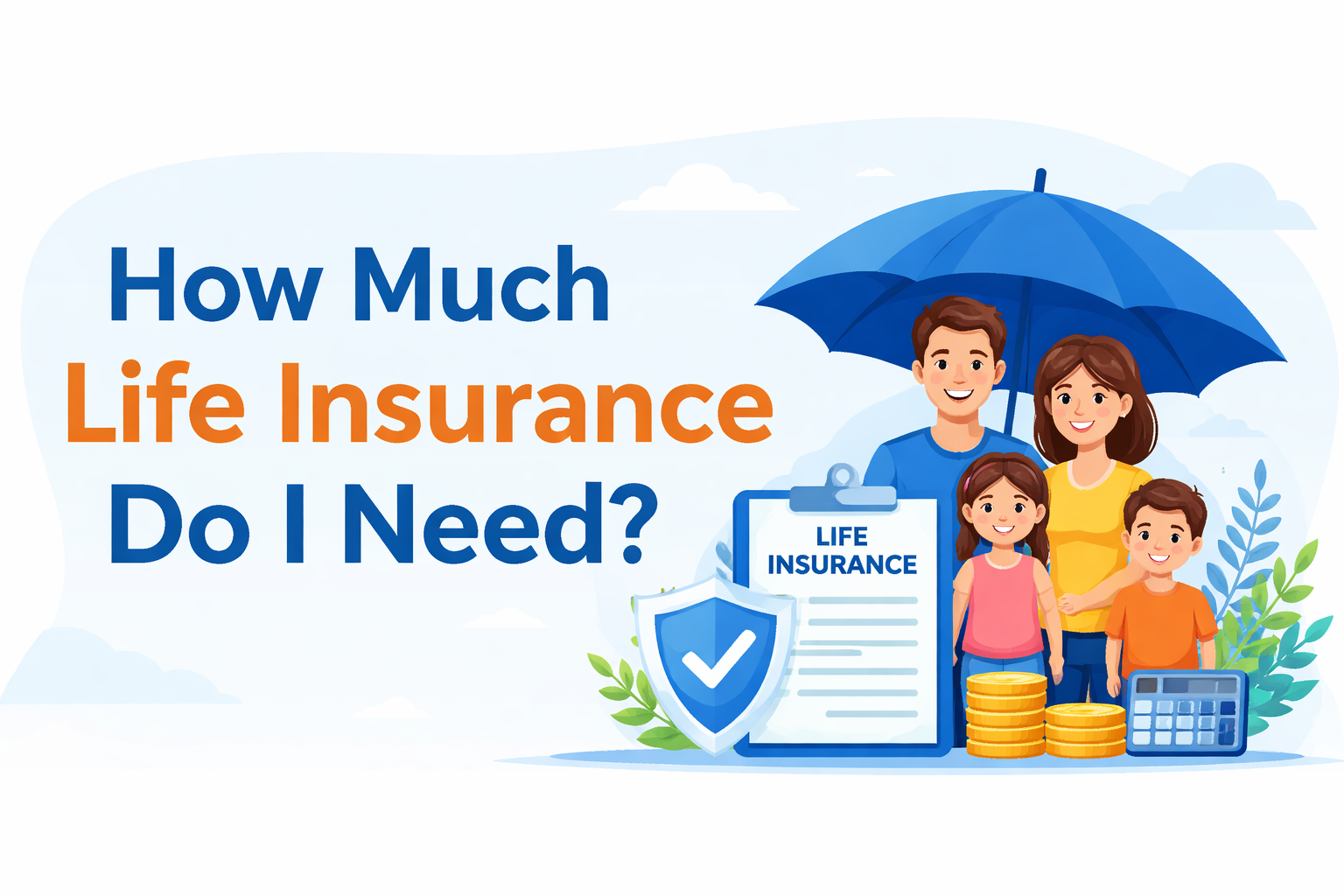
When people ask, how much life insurance do I need, they’re usually not just looking for a number, they’re looking for peace of mind. The dominant search intent here is informational with commercial investigation. Readers want a clear calculation framework before speaking to an insurer or buying a policy.
This guide gives you a precise, step-by-step method to calculate your ideal coverage amount, understand policy types, avoid costly mistakes, and choose coverage that protects your family without overpaying.
What Does “How Much Life Insurance Do I Need” Really Mean?
At its core, this question is about income replacement and financial protection.
Life insurance ensures that if you pass away unexpectedly, your dependents can:
- Cover living expenses
- Pay off debts
- Fund children’s education
- Replace lost income
- Handle funeral costs
- Maintain long-term financial stability
The correct amount depends on your income, liabilities, assets, dependents, and future financial goals.
There is no universal number. But there is a proven formula.
Quick Answer: How Much Life Insurance Do I Need?
Most financial planners recommend coverage equal to 10–15 times your annual income, adjusted for debt, children’s education, and long-term obligations.
However, income multiples are only a starting point. A more accurate method is the DIME formula, which we’ll break down next.
The DIME Method: A Proven Calculation Framework
DIME stands for:
- D – Debt
- I – Income
- M – Mortgage
- E – Education
This method provides a structured, needs-based calculation rather than a guess.
1. Debt
Include:
- Personal loans
- Car loans
- Credit card balances
- Medical bills
- Any co-signed obligations
Do not include mortgage here (that’s calculated separately).
2. Income Replacement
Multiply your annual income by the number of years your family would need support.
Common guideline:
- 10 years minimum
- 15–20 years if you have young children
Example:
If you earn $60,000 annually and want 15 years of replacement:
60,000 × 15 = $900,000
3. Mortgage Balance
Add your outstanding home loan amount.
If your mortgage balance is $250,000, include the full amount so your family can stay in the home debt-free.
4. Education Costs
Estimate future tuition for children.
Include:
- University tuition
- Living expenses
- Books and fees
You can estimate using current tuition rates and adjust conservatively for inflation.
read How Much Is Health Insurance a Month?
Sample Life Insurance Calculation
Let’s combine everything:
- Debt: $40,000
- Income replacement: $900,000
- Mortgage: $250,000
- Education: $100,000
Total recommended coverage:
$1,290,000
This is far more precise than simply multiplying your salary.
Why Getting the Right Coverage Amount Matters
Underinsuring creates financial stress for your family.
Overinsuring increases unnecessary premium costs.
The goal is financial protection not profit, not speculation.
Life insurance should:
- Eliminate financial vulnerability
- Maintain lifestyle stability
- Prevent forced asset sales
- Avoid burdening extended family
Types of Life Insurance Policies
Understanding policy structure helps you match coverage to your needs.
Term Life Insurance
- Coverage for a fixed period (10, 20, or 30 years)
- Lower premiums
- Pure income replacement
- No cash value
Best for:
Young families, mortgage protection, income earners.
Whole Life Insurance
- Permanent coverage
- Builds cash value
- Higher premiums
Best for:
Long-term estate planning or wealth transfer.
Universal Life Insurance
- Flexible premiums
- Adjustable death benefit
- Investment component
Best for:
Advanced financial planning with flexibility.
For most people calculating how much life insurance they need, term life is the most cost-efficient solution.
Key Factors That Influence Coverage Amount
1. Age
Younger applicants pay lower premiums. Buying earlier locks in affordability.
2. Number of Dependents
More dependents = higher income replacement needs.
3. Stay-at-Home Parents
Even if one parent does not earn income, their economic value (childcare, household management) should be insured.
4. Existing Savings and Investments
Subtract liquid assets such as:
- Emergency funds
- Investment portfolios
- Existing life policies
5. Employer Coverage
Group life insurance often equals 1–2x salary, usually not enough.
Common Mistakes When Estimating Life Insurance Needs
- Using only income multiples without factoring debts
- Ignoring inflation
- Underestimating childcare costs
- Assuming employer insurance is sufficient
- Waiting too long and paying higher premiums
Avoiding these mistakes ensures accurate financial planning.
Should You Subtract Savings?
Yes but carefully.
Subtract only assets that are:
- Easily accessible
- Not retirement-restricted
- Not earmarked for other goals
Do not rely solely on retirement accounts unless your spouse can access them penalty-free.
Inflation and Future Costs
Inflation erodes purchasing power over time.
If you plan 20 years of income replacement, consider that expenses may rise.
Some insurers offer:
- Inflation riders
- Increasing death benefit options
These features can protect long-term value.
How Much Life Insurance Do I Need If I’m Single?
If you have no dependents:
You may need minimal coverage mainly to cover:
- Funeral expenses
- Outstanding debts
- Co-signed loans
However, if someone depends on you financially (parents, siblings), coverage becomes necessary.
How Much Life Insurance Do I Need With Kids?
With children, coverage should:
- Replace income until youngest child reaches adulthood
- Cover college tuition
- Eliminate major debts
In many cases, this results in $500,000–$1.5 million or more, depending on income and lifestyle.
Step-by-Step Framework to Decide Today
- Calculate total debts (excluding mortgage)
- Multiply annual income by 10–20 years
- Add mortgage balance
- Add projected education costs
- Subtract liquid savings
- Round up to a clean policy amount
This structured approach ensures confidence before speaking with an insurance provider.
When Should You Recalculate Coverage?
Life insurance needs change after:
- Marriage
- Birth of a child
- Buying a home
- Income increase
- Divorce
- Starting a business
Review coverage every 2–3 years.
Benefits of Adequate Life Insurance Coverage
Financial Stability for Dependents
Adequate life insurance acts like a financial safety net for your family. If something unexpected happens, your dependents can still cover daily living expenses such as rent or mortgage payments, groceries, utility bills, healthcare, and transportation.
Instead of being forced into sudden lifestyle changes, your family can maintain stability while adjusting emotionally. Income replacement ensures your spouse, children, or even aging parents aren’t left struggling financially during an already difficult time.
2. Debt Elimination
Outstanding debts don’t disappear when someone passes away. Mortgages, personal loans, car financing, and credit card balances can quickly become overwhelming for surviving family members.
A well-structured life insurance policy ensures these liabilities are paid off without burdening loved ones. This prevents asset liquidation, protects co-signers, and safeguards your family’s credit standing. Instead of inheriting stress, they inherit financial security.
3. Education Security
Higher education costs continue to rise each year. Without a financial plan in place, your children’s academic goals could be compromised.
Life insurance can be structured to cover future tuition fees, living expenses, books, and other academic costs. This guarantees that your children’s education path remains uninterrupted, preserving opportunities and long-term career prospects even in your absence.
4. Peace of Mind
Financial uncertainty creates anxiety. Having sufficient life insurance coverage provides emotional reassurance that your loved ones will be protected.
This peace of mind allows you to focus on building wealth, growing your career, or expanding your business without constantly worrying about “what if” scenarios. Protection planning reduces long-term stress and strengthens overall financial confidence.
5. Estate Liquidity
In estate planning, liquidity matters. Assets like real estate, businesses, or investments are not always immediately accessible as cash.
Life insurance provides immediate liquidity to:
- Cover estate taxes
- Pay legal or administrative costs
- Settle final expenses
- Distribute inheritances fairly
This prevents forced sales of valuable assets and helps preserve generational wealth.
The Bigger Picture
Proper planning transforms life insurance from a perceived expense into a strategic financial safeguard. When structured correctly, it becomes a cornerstone of long-term financial planning protecting income, preserving assets, and securing your family’s future.
In short, adequate life insurance isn’t just about coverage. It’s about control, continuity, and confidence.
Challenges and Limitations
- Premium costs increase with age
- Health conditions raise rates
- Inflation impacts long-term coverage
- Complex policy riders may confuse buyers
Working with a licensed financial advisor can simplify decision-making.
Tools to Help Calculate Coverage
Consider:
- Online life insurance calculators
- Financial planning software
- Consultation with a Certified Financial Planner (CFP)
- Needs-analysis worksheets
Use tools as guidance not absolute answers.
Future Trends in Life Insurance Planning
- AI-driven underwriting
- Faster digital policy approvals
- Usage-based risk assessment
- Customizable term riders
Modern insurers are making coverage more flexible and accessible.
Final Answer: How Much Life Insurance Do I Need?
You need enough life insurance to:
- Replace 10–20 years of income
- Pay off debts and mortgage
- Fund children’s education
- Protect long-term financial stability
For most families, this falls between 10–15 times annual income, adjusted through the DIME formula.
Life insurance is not about predicting death, it’s about protecting the people who rely on you.
Frequently Asked Questions (FAQ)
1. How much life insurance do I need based on salary?
Most experts recommend 10–15 times your annual income. However, you should also include debt, mortgage balance, and children’s education costs for a more accurate calculation.
2. Is 5 times salary enough life insurance?
Five times salary is often insufficient for families with children or significant debt. It may cover short-term expenses but rarely supports long-term income replacement needs.
3. How much life insurance do stay-at-home parents need?
Stay-at-home parents should carry coverage equal to childcare, household services, and support costs. This can easily total $250,000–$500,000 or more depending on location.
4. Should both spouses have life insurance?
Yes. Both income-earning and non-earning spouses contribute economic value. Coverage protects against financial disruption regardless of which partner passes away.
5. Do I need life insurance if I have no dependents?
If no one relies on your income and you have minimal debt, coverage may not be necessary. However, small policies can cover funeral expenses and outstanding obligations.
6. How often should I review my life insurance coverage?
Review every 2–3 years or after major life events such as marriage, childbirth, home purchase, or salary increase.
7. Does employer life insurance provide enough coverage?
Employer policies typically offer 1–2 times salary, which is rarely sufficient for long-term family protection.
8. Can I have multiple life insurance policies?
Yes. Many individuals layer term policies to match different financial responsibilities over time.
Conclusion
Determining how much life insurance you need requires more than guessing a number. By using the DIME framework and aligning coverage with your real financial responsibilities, you create meaningful protection for your family’s future.
If you found this guide helpful, consider exploring related financial planning resources or subscribing to receive practical wealth-building strategies delivered directly to you.
Mellstroy Casino скачать – полное руководство 2026: установка, бонусы, платежи и безопасность
Casinos com Multibanco em Portugal: tudo o que precisas saber

Get Paid to Stay Alive? The Billionaire Bet on Living to 120

How Much Is Health Insurance a Month?

Will Insurance Cover Ozempic? This Information Tells You the Truth

What Does Life Insurance Cover?7 Must-Known Facts to Protect Your Loved Ones!
-
Health Insurance1 year ago
How Much Is Health Insurance a Month?
-
General Insurance1 year ago
Will Insurance Cover Ozempic? This Information Tells You the Truth
-
Life Insurance1 year ago
What Does Life Insurance Cover?7 Must-Known Facts to Protect Your Loved Ones!
-
 Auto Insurance1 year ago
Why Is My Auto Insurance So High? There Is a Secret Behind High Auto Insurance Costs That Goes Unknown
-
General Insurance4 months ago
Can Cowboys Get Life Insurance?
-
 Life Insurance1 year ago
What Is Life Insurance? Everything You Need to Know!
-

 Auto Insurance4 months ago
How Impound Insurance Works After Your Car Is Seized
-
 Life Insurance1 year ago
How Much Does Life Insurance Cost in 2024? (Real Rates & Saving Tips)