
General Insurance
What Does Chubb insurance Actually Do?



The majority believe that Chubb Insurance is a policy selling company – however there is much more.
Chubb insures homes, vehicles, and companies all over the globe, assists in risk management, and processes claims within a short period of time and in a just manner.
In brief, Chubb proffers actual security and comfort of mind before the troubles even occur.
What does Chubb do?
It provides intelligent insurance and risk management services on homes, cars, valuables and businesses, regarding all types of fire and theft, and even cyber risks.
Chubb makes coverage individualized, quick to claim, and reliably serviceable, which makes protection a no-stress affair.
To summarize, Chubb insures, averts and provides reprieve.
What Services Does Chubb Provide?
Majority believe that Chubb simply provides services to large organizations, well, this is not so.
Chubb Insurance should cover all individuals including homeowners and car owners as well as international companies.
Therefore, in case you are asking yourself what Chubb offers, here is a brief overview of what they offer to individuals and businesses.
1. Personal Insurance -covering Your Everyday Life.
Chubb Insurance is not only an insurance designed to cover large organizations, but it is also designed to cover people who are willing to have good protection and premium touch to their insurance.
The following are the cover points of Chubb personal insurance:
· Homeowners Insurance: Chubb will cover not only your house but your home, valuables, jewelry, art, and collectibles. That is what makes the Chubb homeowners insurance unique.
· Auto Insurance: Chubb is known to settle fast claims and fair and as a result, gets you back on the road in a short time- and even provides you with a brand new model.
· Travel Insurance: It is either the cancellation of the trip, the lost luggage or the medical emergency, Chubb will cover you anywhere you are.
· Personal Liability and Accident Insurance: Get cover in case of an accident that results in injury or property damage – Chubb personal insurance keeps you safe in the pocket.
Concisely, Chubb deals with the most important things – your house, vehicle, travel and tranquility of mind.
2. Business and Commercial Insurance -Keeping Companies Saved.
But what does Chubb Insurance do to businesses?
In a simple manner, it assists the companies to remain secure, grow with ease and recuperate quickly in case of a mishap.
Chubb business insurance is designed to cover your individual risks whether it is a small shop or a global brand.
These are the services that Chubb usually provides:
· Property & Casualty Insurance: Covers your buildings, inventory, and equipment from fire, theft, or damage — perfect for full asset protection.
· Liability Insurance: Chubb provides general liability, all the way to professional liability (E&O) to cover your business in the event of negligence or injury claims by clients.
· Corporate and International coverage: With Chubb corporate insurance, global companies get consistent protection across all offices worldwide
· Cyber & Technology Insurance: Chubb cyber insurance safeguard against data breaches, hacking and other online threats which are mandatory in the contemporary world.
· Environmental & Specialty Coverage:
Chubb provides pollution, equipment damage and industry-specific coverage which is ideal to the industry such as construction, energy, and manufacturing.
Why is Chubb commercial insurance unique?
It fits your business – since no two businesses have the same risks.
Simply stated, Chubb Insurance provides businesses with intelligent safety net – one designed to save, act and endure.
3. Specialty and Professional Coverage Specialty and Professional coverage (Beyond the Basics).
Majority believe that home and car are the only areas where Chubb Insurance covers- this is actually not the case.
Chubb also provides industry and professional specific coverage such as:
· Doctor, lawyers, and consultants professional liability.
· The Marine and aviation insurance.
· Energy and construction projects insurance.
· Cyber risk and data protection plans.
The services demonstrate that Chubb does much more than just conventional insurance by assisting small clinics and even global tech startups in remaining insured.

What Makes Chubb Different from Other Insurers?
People believe that insurance is the same thing through and through, however, Chubb Insurance can show them they are mistaken.
Chubb has a distinguished reputation of fast settlement of claims, customized covers, and solid confidence by the customers across the globe.
We can see what really makes Chubb unlike any other insurance company, and why so many of them remain with them over the years.
1. Individualized Human-Centered and Insurance.
The majority of insurers will sell one-size-fits-all plans; however, Chubb Insurance offers the reverse.
They begin with an awareness of your risks and then construct cover over you.
That is what makes Chubb different personalized, exact protection in which you are not a policy number but an individual with special needs.
2. Excellent Claims Experience -Quick, Just, and Stress-Free.
Claims – and Chubb Insurance brings.
Their crew is fast, professional and non-hustle and they usually leave the place in a better condition.
That is the reason why the customer satisfaction in Chubb is the best in the industry.
3. International Strength Local Touch.
Chubb Insurance might be headquartered in Switzerland but that is not very far away.
Chubb has local expertise and is a global force serving customers in cities such as New York, London and Singapore with teams that are aware of the local needs.
Such a global-local balance enables Chubb to be one of the most reliable insurers in the world.
4. Pay attention to the risk prevention as opposed to compensation.
The next feature that makes Chubb Insurance outstanding they are not only paying claims, but also prevention of risks.
Chubb offers business risk evaluation to home safety recommendations and cyber defense strategies to customers to prevent losses before they occur.
5. Why Customers Trust Chubb
Individuals use Chubb Insurance due to their delivery.
Chubb is an exceptional brand in a saturated market, with global power, individualized coverage, equitable claims and actual expertise.In other words, they care, they can and they will fulfill their promises.

Imagine a world where surviving longer doesn’t just mean more birthdays, it literally pays you.
Sounds like sci-fi, right? But for a growing number of billionaires, living to 120 isn’t just a dream, it’s a calculated investment, a lifestyle, and in some cases, a financial strategy. From cutting-edge biotech to unusual insurance products, the ultra-wealthy are quietly turning longevity into a high-stakes game where the ultimate jackpot is time itself.
Let’s break down this wild concept: the idea that staying alive longer than almost anyone else could actually make you money.
The New Obsession: Outliving Death
Humans have always been obsessed with living longer. From ancient myths to modern medicine, the idea of beating death has never gone out of style. But today, that obsession has evolved into something much bigger and much more expensive.
The modern longevity industry is exploding, with billions pouring into research aimed at slowing or even reversing aging. In fact, this sector is now worth tens of billions globally and growing fast.
At the center of it all? Billionaires.
Tech elites and ultra-wealthy investors are pouring money into startups, research labs, and experimental therapies. Their goal isn’t just to live longer it’s to push the boundaries of human lifespan, possibly beyond 120 years.
And unlike the average person, they have the resources to treat aging like a problem that can be solved.
Meet the “Live to 120” Club
Some of the world’s richest individuals are openly chasing extreme longevity.
- Tech investor Peter Thiel has long been fascinated with defeating aging.
- Oracle founder Larry Ellison invests heavily in anti-aging research.
- Biohacker Bryan Johnson follows a strict daily routine designed to reverse his biological age.
These aren’t just casual health goals. These individuals are investing millions into personalized regimens, strict diets, advanced medical treatments, and experimental science all in pursuit of extending life.
Some even believe that if they can just make it to around 120 years old, future science might allow them to live indefinitely.
Yeah… basically, “live long enough to live forever.”
The Twist: Getting Paid to Live Longer
Here’s where things get really interesting.
There’s a concept in finance called longevity insurance and it flips traditional insurance on its head.
Normally, life insurance pays out when you die. But longevity-based financial products reward you for doing the opposite: staying alive longer than expected.
According to financial experts, longevity insurance works like a “reverse life insurance.” Instead of paying your family after death, it provides income if you live far beyond average life expectancy.
Think of it like this:
- You invest early.
- You survive longer than most people.
- You start receiving payouts later in life (like at 85, 90… or beyond).
In simple terms: you win by not dying.
Why This Exists: The Longevity Risk Problem
This might sound cool, but it actually comes from a real financial problem: longevity risk.
Longevity risk is the danger that people live longer than expected and run out of money. Governments, pension systems, and insurance companies are all struggling with this.
Because if people start living to 100… or 120… retirement systems break.
That’s why new financial products are emerging to handle this reality. And for the wealthy, these tools aren’t just protection, they’re strategy.
Billionaires Treat Longevity Like an Investment Portfolio
Here’s the mindset shift: billionaires don’t see health as just “wellness.”
They see it as ROI (return on investment).
Instead of spending money to treat illness, they spend aggressively to prevent aging itself.
Typical strategies include:
- Personalized medical teams
- Advanced diagnostics and full-body scans
- Stem cell therapies and experimental drugs
- Strict nutrition and fitness protocols
- Continuous health tracking
These aren’t casual habits. They’re optimized systems designed to extend both lifespan and “healthspan” (how long you stay healthy).
Some even follow extreme routines fasting for hours daily, tracking every calorie, and optimizing sleep like it’s a business metric.
The Business of Living Longer
The crazy part? This isn’t just personal, it’s a massive industry.
The anti-aging and longevity market is expected to reach hundreds of billions of dollars globally.
Why?
Because aging is the ultimate universal problem.
Everyone wants more time but only a few can currently afford the most advanced solutions.
This creates a huge gap:
- The wealthy invest in cutting-edge life extension.
- The average person gets traditional healthcare.
And that gap could widen dramatically if breakthroughs actually work.
The Dark Side: Is This Just a Rich People Game?
Not everyone is hyped about this.
Critics argue that the obsession with living longer is less about improving life and more about avoiding death at all costs.
Some believe it’s driven by fear rather than purpose.
And there’s a real ethical question:
What happens if only the rich can afford to live significantly longer?
Imagine a world where billionaires routinely live to 120 while everyone else doesn’t.
That’s not just a health issue, it’s a societal shift.
The Reality Check: Can Humans Actually Reach 120?
Right now, the longest confirmed human lifespan is 122 years.
So technically, it’s possible but extremely rare.
Science is making progress, but there’s still no guaranteed way to consistently reach 120, let alone go beyond it.
Many experts say we can extend healthy years but “immortality” is still far away.
Even among billionaires, results are uncertain.
The Future: A World Where Living Longer Pays
Despite the uncertainty, one thing is clear:
Longevity is becoming financialized.
In the future, we might see:
- More “live longer, earn more” insurance products
- Investments tied to health outcomes
- Personalized longevity plans like retirement portfolios
- Entire economies built around extending human life
For billionaires, this is already happening.
They’re not just trying to live longer they’re betting on it.
Final Thoughts: The Ultimate Flex?
So yeah… getting paid to stay alive sounds wild but it’s real.
For the ultra-wealthy, longevity is no longer just about health. It’s a mix of science, finance, and ambition.
They’re essentially asking:
What if death… was optional (or at least delayed)?
And more importantly:
What if surviving longer made you richer?
For now, it’s a game only a few can play.
But if science keeps evolving, this “billionaire bet” might one day become everyone’s reality.
Until then… staying alive is still free but maybe not for long.
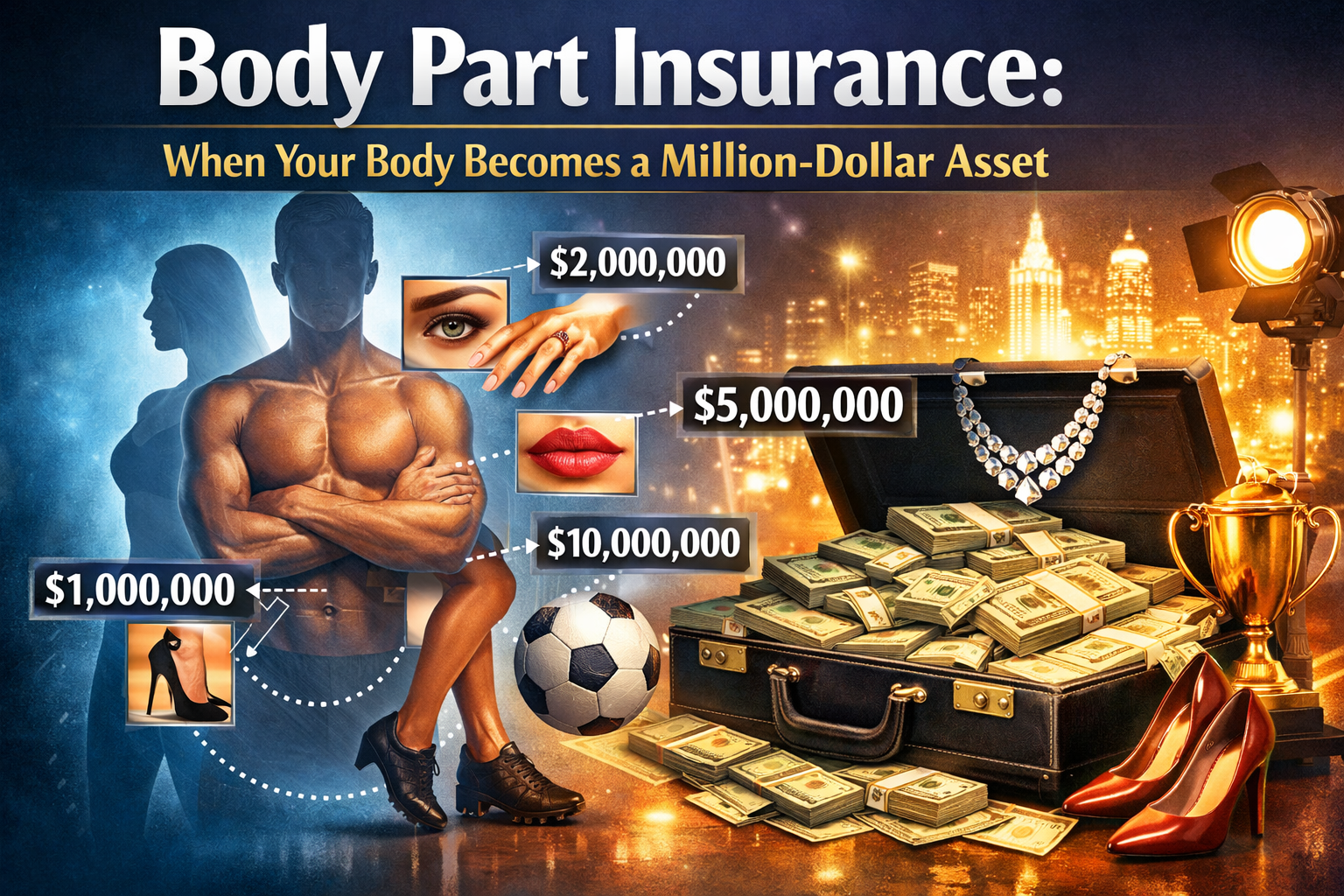
What if your lips were worth millions… or your hair… or even your taste buds? Sounds unreal, but in today’s world of celebrity branding and high-stakes careers, body part insurance is very real and getting bigger.
From Hollywood icons to athletes and even niche professionals, people are turning their physical features into protected financial assets. And the numbers? Absolutely insane.
What Is Body Part Insurance (Deeper Look)?
Body part insurance isn’t a standard policy you can just click and buy online. It usually falls under specialty insurance (often through companies like Lloyd’s of London).
Here’s how it works:
- A person identifies a body part critical to their income
- Insurers assess its value (based on earnings, brand deals, future potential)
- A policy is created to cover damage, loss, or reduced function
- If something happens → payout kicks in
It’s basically treating your body like a business asset.
How Do They Decide the Value?
This part is actually super interesting.
Insurance companies don’t just guess a number they calculate:
- Current income tied to that body part
- Future earning potential
- Market demand (how unique or recognizable it is)
- Risk level (injury chances, lifestyle, profession)
That’s how we end up with numbers like $300 million for legs 😳
More Crazy Real-Life Stories (Gets Wilder 👇)
⚽ David Beckham – The $195 Million Whole Body
David Beckham reportedly insured his entire body for around $195 MILLION.
Why? Because he wasn’t just a footballer he was a global brand. His looks, physique, and presence brought in massive endorsement deals.
🎸 Keith Richards – The $1.6 Million Hands
The legendary guitarist insured his hands for about $1.6 MILLION.
Without them? No guitar. No performances. No income. Simple.
🦵 Heidi Klum – Uneven Legs Worth Millions
Heidi Klum insured her legs—but here’s the twist:
- One leg was valued higher than the other 😭
Total value? Around $2 MILLION
Yes, even tiny differences matter at that level.
🍗 Betty Grable – The Original Million-Dollar Legs
Back in the 1940s, Betty Grable insured her legs for $1 MILLION—which today would be worth over $20+ MILLION adjusted for inflation.
She basically started the trend.
👃 Troy Polamalu – The $1 Million Hair
This one’s iconic.
Troy Polamalu insured his hair for $1 MILLION because it was part of his identity—and even featured in commercials.
👅 Rihanna – The $1 Million Legs
Rihanna reportedly insured her legs for $1 MILLION after winning a “best legs” award.
Brand deals + beauty recognition = $$$
The Weirdest Body Parts Ever Insured 🤯
This is where it gets kinda crazy:
- Taste buds → insured by professional food tasters
- Noses → perfume experts rely on them
- Beards → some celebrities have insured facial hair
- Chest hair → yes, even that has been insured 💀
- Butts → rumored in entertainment industry
Basically, if it can make money… it can be insured.
Can Normal People Do This?
Short answer: yes—but with limits
You don’t need to be a celebrity, but you do need:
- Proof that your income depends on that body part
- A high enough earning level
- A legit reason for risk coverage
Examples:
- A surgeon insuring their hands
- A dancer insuring their feet
- A YouTuber/influencer insuring their appearance
It’s rare but not impossible.
The Hidden Risks (Not All Glamorous)
This isn’t just flexing money—there are downsides too:
1. Expensive Premiums
You might pay thousands (or millions) yearly just to keep the policy active.
2. Strict Conditions
Some policies limit activities:
- No extreme sports
- No risky behavior
- Lifestyle monitoring 👀
3. Claim Challenges
Insurance companies investigate claims deeply. You can’t just say “my voice is off today” and expect millions.
The Business Side of It
This whole industry is growing because of:
- Influencer economy
- Personal branding
- Social media fame
- High-value endorsements
Today, a face or voice can be worth more than a traditional job.
So people are thinking:
“If I insure my car… why not my face?”
Future of Body Part Insurance
This is where things get even more interesting.
In the future, we might see:
- Influencers insuring their Instagram face
- Gamers insuring their hands & reaction time
- AI creators insuring their voice clones
- Virtual influencers insuring digital identity
Yeah… it’s going to get even crazier.
Final Thoughts
Body part insurance might sound like a flex, but it’s actually:
👉 Smart risk management
👉 Brand protection
👉 Financial securityIn a world where you are the product, protecting your most valuable asset just makes sense.

Breakups are messy. Emotionally, socially… and surprisingly, financially.
Now imagine this: your relationship ends, and instead of just dealing with heartbreak, you get money back.
Sounds like something out of a satire blog, but breakup insurance is a real (and growing) niche. It sits at the intersection of modern dating, financial planning, and a slightly cynical view of love.
Let’s get into it.
What Is Breakup Insurance, Really?
Breakup insurance isn’t about putting a price on your feelings. No company is handing out checks because someone left you on read for three days.
Instead, it focuses on financial damage caused by relationships ending.
Think about all the money tied into modern relationships:
- Flights booked months in advance
- Non-refundable hotel reservations
- Wedding venues and deposits
- Shared leases or furniture
Breakup insurance steps in to cover those losses when things fall apart.
So it’s less “get paid for heartbreak” and more:
“at least I’m not broke and heartbroken.”
Where It Actually Exists (And Works)
The most practical and widely used form of breakup insurance is tied to travel.
Some booking platforms and insurance add-ons allow you to cancel a trip if your relationship ends before departure. Instead of losing everything, you get a partial refund.
Real Scenario
A couple in the UK booked a luxury vacation to Santorini—flights, hotel, activities, the full romantic package. A few weeks before departure, they broke up.
Normally, that’s a total loss. Thousands gone.
But because they had a breakup-related cancellation policy, one of them was able to cancel and recover most of the cost. No awkward solo honeymoon, no begging customer support for exceptions.
It turned a financial disaster into a manageable inconvenience.
Wedding Insurance: Where Things Get Serious
If travel insurance is the casual version, wedding insurance is where things become high-stakes.
Weddings are expensive. Like, painfully expensive.
And they’re planned months, sometimes years in advance.
Real Story
In the U.S., a couple had spent over $30,000 on their wedding. Two months before the date, the engagement fell apart.
Without insurance, that money would have been mostly gone venue deposits, catering, decorations, everything locked in.
But because they had wedding insurance that included cancellation coverage, they were able to recover a large portion of the costs.
Still a breakup. Still painful. But not financially devastating.
The Wild Side: Betting on Love
Not all breakup insurance is practical or even legal.
In China, there was a bizarre trend where people could essentially “insure” celebrity relationships.
Here’s how it worked:
- You pay a small amount of money
- Choose a celebrity couple
- If they break up within a certain time, you get paid
It turned relationships into a betting market. Fans weren’t just emotionally invested—they were financially invested.
As you can imagine, regulators shut it down pretty quickly. It blurred the line between insurance and gambling, and raised some serious ethical questions.
Still, it showed something interesting:
People are willing to treat relationships like probabilities.
Everyday “Unofficial” Breakup Insurance
Even without formal policies, people create their own versions of breakup insurance.
Real-Life Examples
- Someone keeps a separate savings account “just in case” a relationship ends
- Couples split big purchases carefully instead of merging finances
- One partner keeps their old apartment lease active during the early stages of moving in
It’s not romantic, but it’s practical.
One Reddit user put it bluntly:
“I loved him, but I also loved having a backup plan.”
Why This Trend Is Growing
Breakup insurance didn’t just appear randomly. It reflects how relationships have changed.
Modern dating is faster, more expensive, and more intertwined with lifestyle.
People:
- Travel together early in relationships
- Move in faster than before
- Spend heavily on shared experiences
- Plan big events like weddings earlier
At the same time, breakups are still common.
That combination of high emotional risk plus high financial investment creates demand for protection.
It’s not about expecting failure. It’s about acknowledging reality.
The Awkward Question: Does This Kill the Romance?
There’s definitely a weird vibe to ensuring your relationship.
Some people see it as smart and responsible.
Others see it as a red flag.
Because let’s be honest bringing up breakup insurance in a relationship conversation sounds like:
“I trust you… but also I’ve read the statistics.”
That tension is what makes this topic so interesting. It sits right between logic and emotion.
The Limits of Breakup Insurance
Here’s where things get complicated.
Insurance works best when risks are:
- Random
- Measurable
- Hard to manipulate
Breakups don’t fit neatly into that.
What counts as a breakup?
What if a couple pretends to split just to claim money?
How do you verify emotional events?
Because of this, most companies avoid offering direct “breakup payouts.”
They stick to covering objective, verifiable losses like cancelled bookings or contracts.
Where This Could Be Heading
Breakup insurance is part of a larger shift toward hyper-personalized insurance.
We already insure things that would have sounded strange a decade ago:
- Pets
- Digital content
- Events
- Even parts of a person’s body in some industries
So it’s not unrealistic to imagine more relationship-related coverage in the future.
Maybe not “heartbreak insurance,” but definitely more policies tied to life events triggered by relationships.
Final Thought
Breakup insurance sounds like a joke at first.
But the more you look at it, the more it makes sense.
It doesn’t mean people believe their relationships will fail.
It just means they’ve seen enough of life to know that sometimes… things don’t go as planned.
And if you can’t protect your heart, at least you can protect your wallet.

Get Paid to Stay Alive? The Billionaire Bet on Living to 120

Body Part Insurance: When Your Body Becomes a Million-Dollar Asset

Get Paid to Break Up? Inside the World of Breakup Insurance

How Much Is Health Insurance a Month?

Will Insurance Cover Ozempic? This Information Tells You the Truth

What Does Life Insurance Cover?7 Must-Known Facts to Protect Your Loved Ones!
-
Health Insurance1 year ago
How Much Is Health Insurance a Month?
-
General Insurance1 year ago
Will Insurance Cover Ozempic? This Information Tells You the Truth
-
Life Insurance1 year ago
What Does Life Insurance Cover?7 Must-Known Facts to Protect Your Loved Ones!
-
 Auto Insurance1 year ago
Why Is My Auto Insurance So High? There Is a Secret Behind High Auto Insurance Costs That Goes Unknown
-
General Insurance4 months ago
Can Cowboys Get Life Insurance?
-
 Life Insurance1 year ago
What Is Life Insurance? Everything You Need to Know!
-

 Health Insurance3 months ago
Mobility Scooter Insurance: What It Is, Why You Need It, and How to Choose the Best Policy
-

 Health Insurance3 months ago
Prima Car Insurance Reviews: Is It the Right Choice for Your Ride?