
General Insurance
Will You Get Fined for Not Having Health Insurance in 2025? Here’s the Truth!


Will You Get Fined for Not Having Health Insurance in 2025? Here’s the Truth! Many people wonder if they will need to pay a penalty for lacking health insurance coverage beginning in 2025. You’re not alone. Many people continue to believe that the government enforces a penalty on citizens without health insurance. You will not need to pay the federal fine because it was eliminated. The IRS does not levy tax penalties to people without medical coverage.
Even though you no longer need to pay federal fines for lacking health insurance. A few states maintain healthcare insurance rules which bring added fines when residents go uninsured. This post explains step by step what happens if you require health insurance.
1. Why Do You Require Health Insurance in Future?
Will Citizens Need to Buy Health Insurance in 2025 per State Regulations?
Your need for health insurance depends upon the specific region you currently reside in.
Under the Affordable Care Act the government demanded everyone to join a health plan or face a penalty. In 2019 the federal government removed the health insurance penalty for all American people. States that lack their own health insurance rules do not fine residents who do not have coverage.
Most states maintain their own health insurance rules for their residents. When you reside in these specified regions you must hold medical protection otherwise you could incur a monetary consequence.
Which States Require Health Insurance in 2025?
Starting in 2025 residents of these states along with D.C. will need to get health insurance according to state law.
- California
- Massachusetts
- New Jersey
- Rhode Island
- Vermont needs residents to maintain health insurance although it does not enforce a fine.
- Washington D.C.
You will face a fine if you do not have health insurance and live in the designated areas mentioned. Each US state sets a different fine during our discussion.
- What about Other States?
No state with a health insurance mandate requires residents to pay a fine. Consider the possibility of sudden medical costs that can reach thousands of dollars before you choose to remain without coverage.
2. In case of not having Health Insurance in 2025?
Consider the health insurance situation in your home state where coverage is needed.
- State-by-State Breakdown of Fines
Every state designs its own procedures and amounts to charge people without health insurance. Here’s what you might pay:
- People in California with household members who are adults must pay at least $900 per person depending on their income.
- Massachusetts citizens who miss health insurance policies risk yearly payments reaching $1,908 (dependent on income and age).
- Each New Jersey household will need to pay between $695 and $3,500 depending on their income.
- People in Rhode Island must pay $695 per adult or 2.5% of their income whichever is larger per adult.
- Washington D.C. – Similar to Rhode Island’s penalty (2.5% of income or $695 minimum).
Vermont needs every person to have health insurance yet it does not enforce any penalty for non-compliance.
will you get fined for not having health insurance in 2025?here’s the truth
- When you reside in these states without health insurance expect the insurance penalty added to your tax filing.
- Your fine will be determined through income-based calculations or by counting the members of your household.
- Certain states provide health plan exemptions for people who cannot afford medical insurance payments.
- The IRS will not impose a tax penalty on people who do not have health insurance.
Nope. The United States federal government ended its program to charge penalties for health insurance noncompliance. Do not stress about IRS consequences for being uninsured anymore. The tax department in your state with a mandate will take actions if you remain uninsured.
- will you get fined for not having health insurance in 2025?here’s the truth
Very few people realize the federal government canceled the health insurance penalty. Today there is no healthcare insurance penalty enforced at the national level. Not having health insurance will not bring added taxes from the IRS.
The rule has changed but it does not mean you have free pass. Your state could fine your health insurance requirements even though the federal penalty against not having insurance has been dropped. This article shows you all required information about health insurance so you understand better.
3.will you get fined for not having health insurance in 2025?here’s the truth
State-by-State Breakdown of Fines
When your state demands medical coverage you will need to pay a financial penalty. You will face these financial penalties for lacking health insurance during 2025.
- People in California who lack health insurance must pay at least $900 per adult plus $450 per child depending on their income.
- The assessment amount for lacking medical insurance ranges from $1,908 per year based on income and age.
- New Jersey will apply penalties between $695 and $3,500 to each household depending on your household income.
- In Rhode Island you will owe either $695 as an adult or 2.5% of your annual income whichever amount is greater.
- Washington D.C. – A fine similar to Rhode Island’s (2.5% of income or $695 minimum).
- Vermont demands health coverage yet does not fine people who lack it.
People without health insurance in these states will need to pay their state taxes including the imposed penalty. Your state fine depends on your income level and household members plus legal requirements in each U.S. state.

How Is the Health Insurance Fine Calculated?
Many states follow a penalty framework that was like the former ACA method.
- A flat fee per person in your household
- The system computes healthcare fines based on your personal income or a set share amount.
Under Rhode Island minimum income penalties a single person who earns $50,000 must pay $1,250 rather than the federal basic amount of $695.
will you get fined for not having health insurance in 2025?here’s the truth
Living in a health insurance mandate state without coverage might result in these consequences
- Surprisingly State Taxes Include a Health Insurance Fine at Tax Filing Time.
- The authority may take your refund amount to pay for penalties you owe.
- Failing to pay health insurance penalties may lead to additional tax penalties plus interest charges.
When you reside in a state that does not enforce health insurance requirements you do not need to pay any financial charges. It makes more sense to choose insurance than to face greater medical payments than the specified obligation.
- All U.S. states do not compel residents to have health insurance.
No. Health insurance requirements exist in fewer than half of American states. The states that force people to carry medical insurance coverage are located in California, Massachusetts, New Jersey, Rhode Island, Vermont, and Washington D.C.
Other states have no fines for going without insurance but you must pay all medical bills if you need care.
4. What specific circumstances allow people to avoid health insurance fine payments?
Good news! Only people who qualify must pay this fine for lacking health insurance. An exemption status enables you to escape the penalty without owning medical insurance.
- What Are the Exemptions for Health Insurance Fines?
States have different penalty waivers yet the major exemptions generally follow these standards.
Income-Related Exemptions
- You are not required to pay the health insurance fine when health costs exceed what you can afford through your income.
- Most states explain unaffordable coverage as medical expenses exceeding 8-8.5 percent of household earnings.
Hardship Exemptions
- You may receive an exemption if you are homeless and have no home or money yet need to avoid being evicted from your current place.
- Insurance penalties might apply for both weather-related disasters and home violence emergency cases.
Religious or Tribal Exemptions
- People who follow religions that forbid medical insurance can use the exemption form.
- Certain established health-sharing networks and Native American tribes qualify for religious exemptions based on their church system.
Short-Term Coverage or Special Situations
- You won’t face penalty when states allow shorter intervals for going without medical insurance.
- A change in your residence or employment situation plus life events usually qualifies for exemption.
How to Qualify for Insurance Exemptions
Typically you must request an exemption and bring your evidence to qualify. Here’s how:
- Examine the exemptions offered by your state through its official website.
- Gather proof (pay stubs, tax returns, medical records, etc.).
- File an exemption request with your state’s tax department.
Your health insurance fine duty becomes exempt when you qualify for the exemption despite your 2025 coverage status.
- Discover Effective Ways to the No Health Insurance Penalty
Yes! You have three effective strategies to avoid facing penalties.
- Health insurance remains affordable for individuals who qualify for tax credits through available price plans.
- If you qualify you don’t need to pay the penalty through exemption.
- A person can move to a state that does not fine for lacking health coverage.
- How to Avoid the Health Insurance Penalty & Find Affordable plans
Customers often think purchasing health insurance costs a lot yet remains accessible to everyone. Individuals think they will be penalized for lacking health insurance yet they can obtain affordable plans through alternative methods.
You can locate affordable health insurance plans while eligibility for free government programs exists. Let’s break it down.
5. How to Avoid the Health Insurance Penalty in 2025
Living under a health insurance mandate means you have legal means to avoid the mandated fine. To escape the health insurance penalty you can take these legal steps.
- 1. Acquire an Affordable Health Insurance Policy
Having any kind of health insurance will prevent you from paying the healthcare fee. Here are your options:
- The Affordable Care Act marketplace helps eligible people obtain health plans with funding support. By getting qualified for premium tax credits most people can afford health insurance plans easier.
- Lower-income citizens can get free or subsidized health insurance through Medicaid or CHIP programs.
- Working people pay less for health insurance when their company offers this benefit instead of buying it on their own. Employers set up programs to pay most of the health insurance premium for their employees.
- Under 30-year-olds and people with hardship exemptions can buy catastrophic medical insurance at low cost to cover essential hospital treatments.
- Your state enables buying short-term health insurance to protect you temporarily when you need coverage for a few months at a reduced price.
- 2. Apply for an Exemption
The earlier part of our discussion highlighted that numerous people can receive exemptions. You escape the fine requirement when you match the requirements regardless of your insurance status.
Check your state tax website today to learn about exemptions then provide needed documents before tax season starts.
- 3. Think about Moving to States with No Health Insurance Rules
When you plan to move anyway the decision to settle in a state without health insurance penalties reduces your expenditure.

6. How to Find Affordable Health Insurance in 2025
Most individuals do not take health insurance because they think it costs too much. Access to affordable health insurance exists but you will need to explore different options to find a suitable choice.
- 1. See if You Meet the Criteria for Government Health Plan Support
The Affordable Care Act lets eligible people get financial help that makes health insurance more affordable. Under the Affordable Care Act millions of Americans can get quality health plans at $10 or less each month because of tax credits.
Understand your qualification process.
- Visit HealthCare.gov or go to your state health insurance portal.
- Input your income numbers and household data at the website to see if you qualify for cost discounts.
- Decide on a health plan that matches your available money.
- 2. Compare Health Insurance Plans Online
Take the time to review multiple health insurance choices before picking one because you may uncover better price offerings. Websites like:
- HealthCare.gov (for ACA plans)
- Private insurance comparison sites
- State health exchanges
You can get affordable health insurance by letting the comparison services match you with plans that match your budget and medical requirements.
- 3. Consider High-Deductible Plans with HSAs
People who stay healthy and need limited medical care should choose the combination of a high-deductible health plan with a Health Savings Account to save money.
- Lower monthly premiums
- Tax-free savings for medical expenses
- The plan suits individuals who require limited medical services.
- 4. Look for Employer Health Benefits
Take advantage of your workplace health benefits since they exist for your benefit. Most people find employer health insurance costs less than a regular health insurance plan.
- Many professional groups assist self-employed people in finding group health insurance plans at special discounted prices.
- 5. Look into the healthcare programs Medicaid or CHIP if you earn an income considered too low
When you earn less than a specified amount you may join Medicaid and CHIP programs which give you affordable or free access to health care services.
- Use Medicaid.gov and your state Medicaid website to confirm if you meet the program requirements.
Finding Low-Cost Health Insurance Is Possible
will you get fined for not having health insurance in 2025?here’s the truth
People should not cancel their health insurance to save money since numerous budget-friendly choices exist to protect their healthcare needs.
Check your medical insurance choices and select plans that fit your needs before any medical emergencies happen.


Imagine a world where surviving longer doesn’t just mean more birthdays, it literally pays you.
Sounds like sci-fi, right? But for a growing number of billionaires, living to 120 isn’t just a dream, it’s a calculated investment, a lifestyle, and in some cases, a financial strategy. From cutting-edge biotech to unusual insurance products, the ultra-wealthy are quietly turning longevity into a high-stakes game where the ultimate jackpot is time itself.
Let’s break down this wild concept: the idea that staying alive longer than almost anyone else could actually make you money.
The New Obsession: Outliving Death
Humans have always been obsessed with living longer. From ancient myths to modern medicine, the idea of beating death has never gone out of style. But today, that obsession has evolved into something much bigger and much more expensive.
The modern longevity industry is exploding, with billions pouring into research aimed at slowing or even reversing aging. In fact, this sector is now worth tens of billions globally and growing fast.
At the center of it all? Billionaires.
Tech elites and ultra-wealthy investors are pouring money into startups, research labs, and experimental therapies. Their goal isn’t just to live longer it’s to push the boundaries of human lifespan, possibly beyond 120 years.
And unlike the average person, they have the resources to treat aging like a problem that can be solved.
Meet the “Live to 120” Club
Some of the world’s richest individuals are openly chasing extreme longevity.
- Tech investor Peter Thiel has long been fascinated with defeating aging.
- Oracle founder Larry Ellison invests heavily in anti-aging research.
- Biohacker Bryan Johnson follows a strict daily routine designed to reverse his biological age.
These aren’t just casual health goals. These individuals are investing millions into personalized regimens, strict diets, advanced medical treatments, and experimental science all in pursuit of extending life.
Some even believe that if they can just make it to around 120 years old, future science might allow them to live indefinitely.
Yeah… basically, “live long enough to live forever.”
The Twist: Getting Paid to Live Longer
Here’s where things get really interesting.
There’s a concept in finance called longevity insurance and it flips traditional insurance on its head.
Normally, life insurance pays out when you die. But longevity-based financial products reward you for doing the opposite: staying alive longer than expected.
According to financial experts, longevity insurance works like a “reverse life insurance.” Instead of paying your family after death, it provides income if you live far beyond average life expectancy.
Think of it like this:
- You invest early.
- You survive longer than most people.
- You start receiving payouts later in life (like at 85, 90… or beyond).
In simple terms: you win by not dying.
Why This Exists: The Longevity Risk Problem
This might sound cool, but it actually comes from a real financial problem: longevity risk.
Longevity risk is the danger that people live longer than expected and run out of money. Governments, pension systems, and insurance companies are all struggling with this.
Because if people start living to 100… or 120… retirement systems break.
That’s why new financial products are emerging to handle this reality. And for the wealthy, these tools aren’t just protection, they’re strategy.
Billionaires Treat Longevity Like an Investment Portfolio
Here’s the mindset shift: billionaires don’t see health as just “wellness.”
They see it as ROI (return on investment).
Instead of spending money to treat illness, they spend aggressively to prevent aging itself.
Typical strategies include:
- Personalized medical teams
- Advanced diagnostics and full-body scans
- Stem cell therapies and experimental drugs
- Strict nutrition and fitness protocols
- Continuous health tracking
These aren’t casual habits. They’re optimized systems designed to extend both lifespan and “healthspan” (how long you stay healthy).
Some even follow extreme routines fasting for hours daily, tracking every calorie, and optimizing sleep like it’s a business metric.
The Business of Living Longer
The crazy part? This isn’t just personal, it’s a massive industry.
The anti-aging and longevity market is expected to reach hundreds of billions of dollars globally.
Why?
Because aging is the ultimate universal problem.
Everyone wants more time but only a few can currently afford the most advanced solutions.
This creates a huge gap:
- The wealthy invest in cutting-edge life extension.
- The average person gets traditional healthcare.
And that gap could widen dramatically if breakthroughs actually work.
The Dark Side: Is This Just a Rich People Game?
Not everyone is hyped about this.
Critics argue that the obsession with living longer is less about improving life and more about avoiding death at all costs.
Some believe it’s driven by fear rather than purpose.
And there’s a real ethical question:
What happens if only the rich can afford to live significantly longer?
Imagine a world where billionaires routinely live to 120 while everyone else doesn’t.
That’s not just a health issue, it’s a societal shift.
The Reality Check: Can Humans Actually Reach 120?
Right now, the longest confirmed human lifespan is 122 years.
So technically, it’s possible but extremely rare.
Science is making progress, but there’s still no guaranteed way to consistently reach 120, let alone go beyond it.
Many experts say we can extend healthy years but “immortality” is still far away.
Even among billionaires, results are uncertain.
The Future: A World Where Living Longer Pays
Despite the uncertainty, one thing is clear:
Longevity is becoming financialized.
In the future, we might see:
- More “live longer, earn more” insurance products
- Investments tied to health outcomes
- Personalized longevity plans like retirement portfolios
- Entire economies built around extending human life
For billionaires, this is already happening.
They’re not just trying to live longer they’re betting on it.
Final Thoughts: The Ultimate Flex?
So yeah… getting paid to stay alive sounds wild but it’s real.
For the ultra-wealthy, longevity is no longer just about health. It’s a mix of science, finance, and ambition.
They’re essentially asking:
What if death… was optional (or at least delayed)?
And more importantly:
What if surviving longer made you richer?
For now, it’s a game only a few can play.
But if science keeps evolving, this “billionaire bet” might one day become everyone’s reality.
Until then… staying alive is still free but maybe not for long.
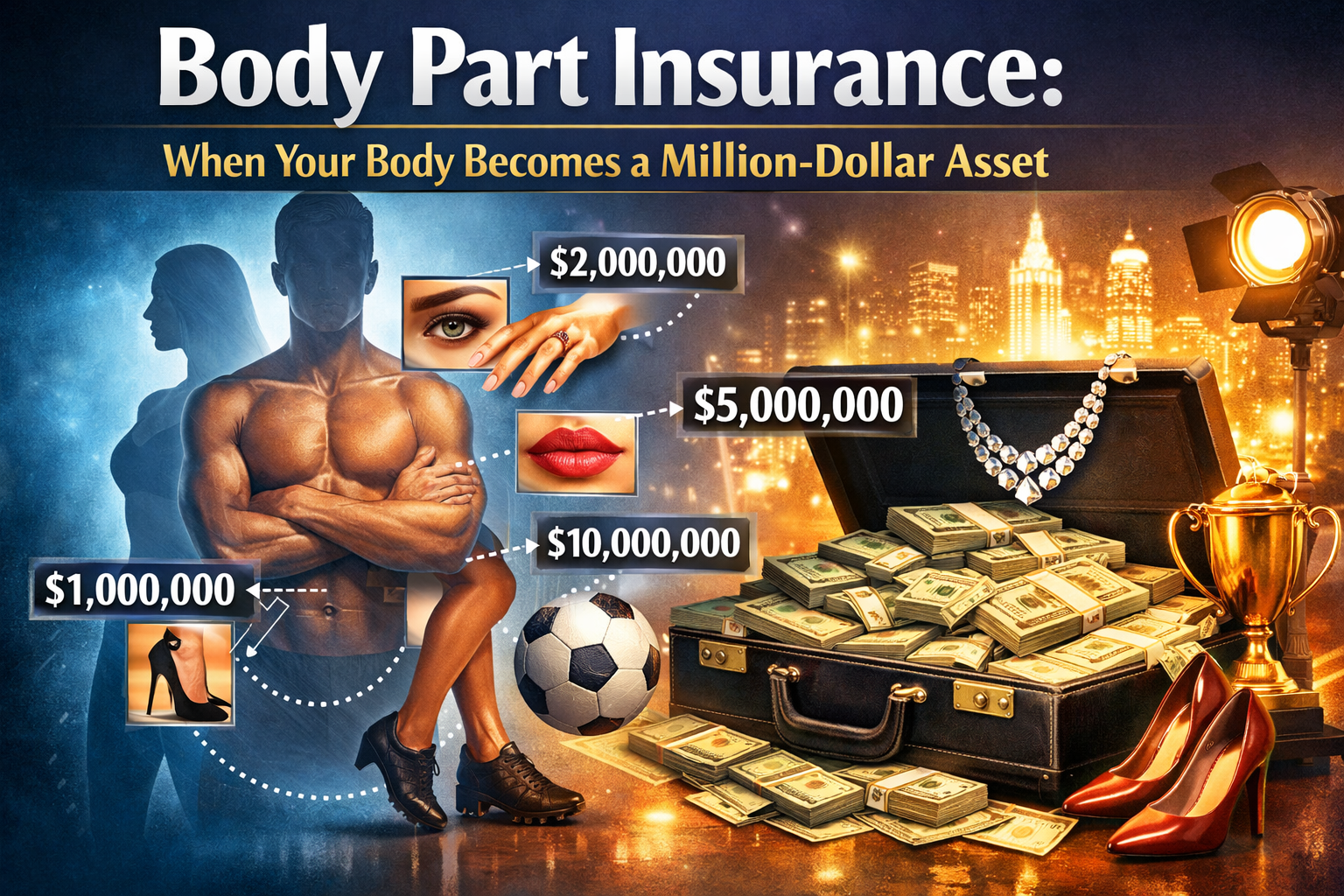
What if your lips were worth millions… or your hair… or even your taste buds? Sounds unreal, but in today’s world of celebrity branding and high-stakes careers, body part insurance is very real and getting bigger.
From Hollywood icons to athletes and even niche professionals, people are turning their physical features into protected financial assets. And the numbers? Absolutely insane.
What Is Body Part Insurance (Deeper Look)?
Body part insurance isn’t a standard policy you can just click and buy online. It usually falls under specialty insurance (often through companies like Lloyd’s of London).
Here’s how it works:
- A person identifies a body part critical to their income
- Insurers assess its value (based on earnings, brand deals, future potential)
- A policy is created to cover damage, loss, or reduced function
- If something happens → payout kicks in
It’s basically treating your body like a business asset.
How Do They Decide the Value?
This part is actually super interesting.
Insurance companies don’t just guess a number they calculate:
- Current income tied to that body part
- Future earning potential
- Market demand (how unique or recognizable it is)
- Risk level (injury chances, lifestyle, profession)
That’s how we end up with numbers like $300 million for legs 😳
More Crazy Real-Life Stories (Gets Wilder 👇)
⚽ David Beckham – The $195 Million Whole Body
David Beckham reportedly insured his entire body for around $195 MILLION.
Why? Because he wasn’t just a footballer he was a global brand. His looks, physique, and presence brought in massive endorsement deals.
🎸 Keith Richards – The $1.6 Million Hands
The legendary guitarist insured his hands for about $1.6 MILLION.
Without them? No guitar. No performances. No income. Simple.
🦵 Heidi Klum – Uneven Legs Worth Millions
Heidi Klum insured her legs—but here’s the twist:
- One leg was valued higher than the other 😭
Total value? Around $2 MILLION
Yes, even tiny differences matter at that level.
🍗 Betty Grable – The Original Million-Dollar Legs
Back in the 1940s, Betty Grable insured her legs for $1 MILLION—which today would be worth over $20+ MILLION adjusted for inflation.
She basically started the trend.
👃 Troy Polamalu – The $1 Million Hair
This one’s iconic.
Troy Polamalu insured his hair for $1 MILLION because it was part of his identity—and even featured in commercials.
👅 Rihanna – The $1 Million Legs
Rihanna reportedly insured her legs for $1 MILLION after winning a “best legs” award.
Brand deals + beauty recognition = $$$
The Weirdest Body Parts Ever Insured 🤯
This is where it gets kinda crazy:
- Taste buds → insured by professional food tasters
- Noses → perfume experts rely on them
- Beards → some celebrities have insured facial hair
- Chest hair → yes, even that has been insured 💀
- Butts → rumored in entertainment industry
Basically, if it can make money… it can be insured.
Can Normal People Do This?
Short answer: yes—but with limits
You don’t need to be a celebrity, but you do need:
- Proof that your income depends on that body part
- A high enough earning level
- A legit reason for risk coverage
Examples:
- A surgeon insuring their hands
- A dancer insuring their feet
- A YouTuber/influencer insuring their appearance
It’s rare but not impossible.
The Hidden Risks (Not All Glamorous)
This isn’t just flexing money—there are downsides too:
1. Expensive Premiums
You might pay thousands (or millions) yearly just to keep the policy active.
2. Strict Conditions
Some policies limit activities:
- No extreme sports
- No risky behavior
- Lifestyle monitoring 👀
3. Claim Challenges
Insurance companies investigate claims deeply. You can’t just say “my voice is off today” and expect millions.
The Business Side of It
This whole industry is growing because of:
- Influencer economy
- Personal branding
- Social media fame
- High-value endorsements
Today, a face or voice can be worth more than a traditional job.
So people are thinking:
“If I insure my car… why not my face?”
Future of Body Part Insurance
This is where things get even more interesting.
In the future, we might see:
- Influencers insuring their Instagram face
- Gamers insuring their hands & reaction time
- AI creators insuring their voice clones
- Virtual influencers insuring digital identity
Yeah… it’s going to get even crazier.
Final Thoughts
Body part insurance might sound like a flex, but it’s actually:
👉 Smart risk management
👉 Brand protection
👉 Financial securityIn a world where you are the product, protecting your most valuable asset just makes sense.

Breakups are messy. Emotionally, socially… and surprisingly, financially.
Now imagine this: your relationship ends, and instead of just dealing with heartbreak, you get money back.
Sounds like something out of a satire blog, but breakup insurance is a real (and growing) niche. It sits at the intersection of modern dating, financial planning, and a slightly cynical view of love.
Let’s get into it.
What Is Breakup Insurance, Really?
Breakup insurance isn’t about putting a price on your feelings. No company is handing out checks because someone left you on read for three days.
Instead, it focuses on financial damage caused by relationships ending.
Think about all the money tied into modern relationships:
- Flights booked months in advance
- Non-refundable hotel reservations
- Wedding venues and deposits
- Shared leases or furniture
Breakup insurance steps in to cover those losses when things fall apart.
So it’s less “get paid for heartbreak” and more:
“at least I’m not broke and heartbroken.”
Where It Actually Exists (And Works)
The most practical and widely used form of breakup insurance is tied to travel.
Some booking platforms and insurance add-ons allow you to cancel a trip if your relationship ends before departure. Instead of losing everything, you get a partial refund.
Real Scenario
A couple in the UK booked a luxury vacation to Santorini—flights, hotel, activities, the full romantic package. A few weeks before departure, they broke up.
Normally, that’s a total loss. Thousands gone.
But because they had a breakup-related cancellation policy, one of them was able to cancel and recover most of the cost. No awkward solo honeymoon, no begging customer support for exceptions.
It turned a financial disaster into a manageable inconvenience.
Wedding Insurance: Where Things Get Serious
If travel insurance is the casual version, wedding insurance is where things become high-stakes.
Weddings are expensive. Like, painfully expensive.
And they’re planned months, sometimes years in advance.
Real Story
In the U.S., a couple had spent over $30,000 on their wedding. Two months before the date, the engagement fell apart.
Without insurance, that money would have been mostly gone venue deposits, catering, decorations, everything locked in.
But because they had wedding insurance that included cancellation coverage, they were able to recover a large portion of the costs.
Still a breakup. Still painful. But not financially devastating.
The Wild Side: Betting on Love
Not all breakup insurance is practical or even legal.
In China, there was a bizarre trend where people could essentially “insure” celebrity relationships.
Here’s how it worked:
- You pay a small amount of money
- Choose a celebrity couple
- If they break up within a certain time, you get paid
It turned relationships into a betting market. Fans weren’t just emotionally invested—they were financially invested.
As you can imagine, regulators shut it down pretty quickly. It blurred the line between insurance and gambling, and raised some serious ethical questions.
Still, it showed something interesting:
People are willing to treat relationships like probabilities.
Everyday “Unofficial” Breakup Insurance
Even without formal policies, people create their own versions of breakup insurance.
Real-Life Examples
- Someone keeps a separate savings account “just in case” a relationship ends
- Couples split big purchases carefully instead of merging finances
- One partner keeps their old apartment lease active during the early stages of moving in
It’s not romantic, but it’s practical.
One Reddit user put it bluntly:
“I loved him, but I also loved having a backup plan.”
Why This Trend Is Growing
Breakup insurance didn’t just appear randomly. It reflects how relationships have changed.
Modern dating is faster, more expensive, and more intertwined with lifestyle.
People:
- Travel together early in relationships
- Move in faster than before
- Spend heavily on shared experiences
- Plan big events like weddings earlier
At the same time, breakups are still common.
That combination of high emotional risk plus high financial investment creates demand for protection.
It’s not about expecting failure. It’s about acknowledging reality.
The Awkward Question: Does This Kill the Romance?
There’s definitely a weird vibe to ensuring your relationship.
Some people see it as smart and responsible.
Others see it as a red flag.
Because let’s be honest bringing up breakup insurance in a relationship conversation sounds like:
“I trust you… but also I’ve read the statistics.”
That tension is what makes this topic so interesting. It sits right between logic and emotion.
The Limits of Breakup Insurance
Here’s where things get complicated.
Insurance works best when risks are:
- Random
- Measurable
- Hard to manipulate
Breakups don’t fit neatly into that.
What counts as a breakup?
What if a couple pretends to split just to claim money?
How do you verify emotional events?
Because of this, most companies avoid offering direct “breakup payouts.”
They stick to covering objective, verifiable losses like cancelled bookings or contracts.
Where This Could Be Heading
Breakup insurance is part of a larger shift toward hyper-personalized insurance.
We already insure things that would have sounded strange a decade ago:
- Pets
- Digital content
- Events
- Even parts of a person’s body in some industries
So it’s not unrealistic to imagine more relationship-related coverage in the future.
Maybe not “heartbreak insurance,” but definitely more policies tied to life events triggered by relationships.
Final Thought
Breakup insurance sounds like a joke at first.
But the more you look at it, the more it makes sense.
It doesn’t mean people believe their relationships will fail.
It just means they’ve seen enough of life to know that sometimes… things don’t go as planned.
And if you can’t protect your heart, at least you can protect your wallet.

Get Paid to Stay Alive? The Billionaire Bet on Living to 120

Body Part Insurance: When Your Body Becomes a Million-Dollar Asset

Get Paid to Break Up? Inside the World of Breakup Insurance

How Much Is Health Insurance a Month?

Will Insurance Cover Ozempic? This Information Tells You the Truth

What Does Life Insurance Cover?7 Must-Known Facts to Protect Your Loved Ones!
-
Health Insurance1 year ago
How Much Is Health Insurance a Month?
-
General Insurance1 year ago
Will Insurance Cover Ozempic? This Information Tells You the Truth
-
Life Insurance1 year ago
What Does Life Insurance Cover?7 Must-Known Facts to Protect Your Loved Ones!
-
 Auto Insurance1 year ago
Why Is My Auto Insurance So High? There Is a Secret Behind High Auto Insurance Costs That Goes Unknown
-
General Insurance4 months ago
Can Cowboys Get Life Insurance?
-

 Health Insurance3 months ago
Prima Car Insurance Reviews: Is It the Right Choice for Your Ride?
-
 Life Insurance1 year ago
What Is Life Insurance? Everything You Need to Know!
-

 Health Insurance3 months ago
Mobility Scooter Insurance: What It Is, Why You Need It, and How to Choose the Best Policy