
General Insurance
Will Your Insurance Go Up If Someone Hits You? (The Truth You Need to Know!)


Will Your Insurance Go Up If Someone Hits You? (The Truth You Need to Know!) People who suffer car damage from others assume their insurance premiums will not rise because the accident occurred due to another driver’s negligence. That sounds fair, right? The system does not function this way consistently. Drivers experience surprise when their not-at-fault accident fails to prevent their car insurance rates from rising.
But why? When specifically during the process does this insurance change become effective? Let’s break it down.
1. Certain situations can cause car insurance rates to grow when another driver causes an accident.
1.1 Quick Answer: It Depends!
The insurance rates for most cases stay unchanged when an accident is caused by another driver. Several aspects influence whether car insurance premiums increase because these exceptions exist.
✔️ Your insurance company’s policy on not-at-fault accidents.
The accidents mentioned in your profile history.
You will avoid insurance rate increases if the at-fault driver either has or lacks coverage.
As per insurance company policies you may notice increased premiums just because your system identifies you as a “higher risk” driver. Crazy, right? The insurance company uses this approach to make their case.

1.2 What Insurance Companies Look At
Your insurer examines multiple factors to determine if they will hike your premium rates after any crash where you are not at fault.
1) Your Accident History
New drivers who encounter their initial accident experience lower chances of sustaining future damages in collisions.
Insurance firms view multiple accident history with or without liability involvement as an indicator they will make additional claims in the future.
2) The Claim Amount
Minor accident incidents known as fender benders typically do not lead to rate increases.
Large claims that exceed loss of car value alongside essential care expenses typically result in premium increases.
2. How Do Insurance Companies Decide Fault in an Accident?
2.1 The evaluation process starts with police reports along with accident investigation results.
Insurance companies use more than your statements to determine accident cases following a collision. They analyze:
The insurance company needs to examine formal police documents which provide details about the incident when authorities attend a crash site.
Police investigate the accident site by gathering photos videos along with vehicle damage details to create evidence.
2.2 How Insurers Use Evidence
Insurance adjusters look for:
Hazard evaluation specialists interpret the evidence related to which vehicle struck the other vehicle.
• Traffic camera footage (if available).
The insurance adjuster requires both different parties to provide statements which need to match up with the evidence presented.
- The presence of a dashcam proves extremely beneficial because it demonstrates your innocence in crash-related incidents.
- The insurance company extends compensation based on percentages of shared fault.
- Under a comparative negligence framework several states allow insurance companies to reduce financial compensation based on their assessment of the policyholder’s percentage of responsibility for the covered incident.
- Insurance companies reduce compensation payments by 20% when they determine the insured person responsible for 20% of the accident.
A claim without complete fault becomes invalid when you are assessed responsible for more than half of the caused damage.
will your insurance go up if someone hits you?(the truth you need to know)
3. How Do Insurance Companies Decide Fault in an Accident?
3.1 Police Reports Together With Accident Investigations Play A Key Role
The police report plays the largest role in determining fault after a car accident provided there was one created by authorities on the scene. Police officers follow a specific procedure when they reach accident sites including:
The incident must be recorded by investigating factors through testimonies from drivers plus witnesses.
✔️ Take pictures of vehicle damage and road conditions.
The traffic officer provides traffic citations to motorists who violate traffic regulations.
Insurance firms heavily depend on this report during their decision-making processes. After a police report identifies the driver responsible for causing the accident your insurance claim will experience reduced challenges.
3.2 How Insurers Use Evidence to Determine Fault
The analysis of additional evidence follows the review of police reports in insurance investigations.
The placement of vehicle damage which includes dents and scratches together with impact marks provides evidence to show that caused the collision.
Dash cam footage and traffic camera recordings serve as concrete evidence of accident incidents when such systems are deployed.
Each insurer will rely on third-party witnesses to describe the accident through their unbiased testimonies.
3.3 Some accidents aren’t 100% clear-cut. The insurance claim process becomes difficult to handle when two drivers equally contribute to a collision.
- A comparison of driver responsibilities takes place under comparative negligence state laws since both parties bear responsibility for the accident.
- An insurance claim payout will be reduced by 20% when you are responsible for 20% of the accident.
- Damages recovery becomes impossible in those states when a driver’s contribution to the accident exceeds 51%.
will your insurance go up if someone hits you?(the truth you need to know)
4. Does Insurance Rate Risk Exist for Fault-Innocent Drivers?
Under some circumstances your premium can still rise even when you were not at fault in an accident.
When an accident happens without your responsibility you naturally expect your insurance premium to maintain its current level. The situation does not always play out this way. Your premium rate may increase when one of three conditions arises.
1) You Live in a No-Fault State
Every driver in no-fault states receives insurance coverage for their damages from their own policy regardless of who created the accident. Your insurance company must pay damages even in cases where you are not at fault thus leading to increased premiums.
2) Your Insurance Company Has a Not-At-Fault Surcharge
Several insurance companies adopt policy changes to increase premiums when any accident occurs regardless of fault. The system is unfair even though such cases occur. Always check your insurer’s policy!
3) The Other Driver Was Uninsured or Under insured
Your own uninsured motorist protection will activate in situations where the at-fault driver responsible has no insurance coverage. Using your insurance coverage through payments from the insurer results in rate adjustments from the company.
4) You have experienced multiple accidents though you were innocent in all cases.
Your premium might experience an adjustment even when all previous accidents were not your responsibility according to your insurer.
4.2 Situations Where Your Rate Won’t Go Up
Luckily, not all insurers raise rates for not-at-fault accidents. Your premium may stay the same if:
The at-fault driver’s insurance fully covers the claim.
Your insurance company has an accident forgiveness policy.
You live in a state where insurers can’t legally raise rates for not-at-fault claims.
5. What Happens If the At-Fault Driver Is Uninsured or Under insured?
5.1 Understanding Uninsured and Under insured Drivers
Insurance protection should cover the costs when a person without coverage causes an accident but their insurance becomes a question mark in these situations.
The insurance coverage known as Uninsured Motorist Coverage (UMC) and Under insured Motorist Coverage (UIM) provides protection in these circumstances. Uninsured Motorist Coverage’s together with Under insured Motorist Coverage protect your interests at times when the at-fault driver lacks funds.
- The Uninsured Motorist Coverage (UMC) operates to pay for your damages which arise from drivers without insurance.
- Your Under insured Motorist Coverage (UIM) will pay extra damages that remain after the inadequate insurance of the at-fault driver.
Under this scenario the process of your claim operates through Uninsured Motorist Coverage (UMC) and Under insured Motorist Coverage (UIM).
5.2 Accidents with uninsured drivers require you to rely on the following options for receiving coverage:
Uninsured motorist coverage can enable you to file a claim if you obtain such insurance.
You have two options to resolve the situation:
- First use collision coverage yet expects to pay your deductible and second seek help with under insured motorist coverage (but you must also pay your deductible amount).
- You can file a lawsuit against the driver who caused the accident although having no insurance indicates little to no financial assets.
People without UMC/UIM coverage are left with two choices: self-payment for damages or pursuing legal action against the driver with minimal success.
will your insurance go up if someone hits you?(the truth you need to know)
5.3 Will Your Insurance Go Up If an Uninsured Driver Hits You?
Your rates have the potential to rise when you become the victim of a collision with an uninsured driver.
The answer? The determination of insurance rate changes following a collision with an uninsured driver depends on the specific policies of your company and the local laws of your state.
The rates of some insurance companies will not rise when accidents occur that were not your responsibility.
5.4 How to Protect Yourself from Uninsured Drivers
Drivers need preparation because millions of other drivers operate their vehicles without insurance coverage. Here’s how:
- Good coverage for uninsured or under insured motorists is inexpensive and keeps you from high post-accident expenses.
- Customers should examine their policy since certain insurers offer accident forgiveness benefits that prevent rate increases after not-at-fault collisions.

- Defensive driving practices should be employed to stay away from hazardous conditions and to mind the actions of distracted drivers.
- Should you install a dash cam it will ensure faster claims processing and decrease the risk of disagreements.
will your insurance go up if someone hits you?(the truth you need to know)
6. How Can You Prevent Your Insurance Rate from Increasing After an Accident?
Revealing even minor involvement in accidents prompts insurance companies to search for any factor that could result in higher premium costs. But don’t worry—you’re not powerless. Several steps exist to decrease the chance that your premium rates will increase.
6.1 Check with your insurance provider about their procedures for cases where you are not at fault.
Each insurance provider follows different approaches to manage claims where its policyholders are not at fault. Several insurers choose not to increase rates yet others implement such actions even for simple incidents. Call your insurer and ask:
- Do you face premium increase when an accident occurs which did not result from your actions?
You should seek alternative insurance coverage from different companies when they provide an unsatisfactory response.
6.2 Consider Switching Insurance Providers
Insurance companies do not process claims with equal methods. Such companies focus on giving good rates to drivers who maintain safety records despite previous accidents.
6.3 Take Advantage of Accident Forgiveness
Insurance providers that include a feature which makes your first accident immune to premium price changes.
1 Who qualifies? Usually drivers with a clean record for at least 3-5 years.
2 How do you get it? Accident coverage might arrive included by some firms but other companies ask you to pay separately for this option.
6.4 Increase Your Deductible
Insurance premiums decrease when you choose to pay a bigger amount through your deductible before insurance coverage starts. A greater deductible you choose will help offset increased insurance rates.
Example:
- Your premium cost becomes higher when your chosen deductible stands at $500.
- Your premium cost drops when you set your deductible at $1,000 compared to when it is $500.
6.5 Look for Discounts to Offset Any Increase
You can achieve cost savings even with higher rates through the utilisation of available discounts.
- Getting a safe driver discount provides you with a reduced premium since you have maintained multiple years without incidents or traffic violations.
- The bundling discount applies when you obtain home, renters and life insurance in addition to your auto coverage.
- The insurance company provides a Low Mileage Discount to customers who drive lesser distances than the standard.
- Good Student Discount – For students with high grades.
6.6 Dispute Any Unfair Rate Increases
You can proceed with several steps if your insurer applies an unfair rate increase.
- Contact them through phone to request them lower your premium rates.
- Evidence of an accidental fault can be reviewed by submitting proper documentation.
- You can file a complaint to your state’s Department of Insurance whenever your insurer behaves unfairly.
Many insurance consumers think that informing their insurer about accidents ensures their coverage will be managed cost less by the insurance company. People believe their insurance premiums will stay unaffected no matter whether they file a claim while accepting responsibility or not.
will your insurance go up if someone hits you?(the truth you need to know)
7. Common Mistakes That Can Lead to Higher Insurance Rates
7.1 Failing to Report the Accident Immediately
Failing to report the accident immediately stands as the largest error you could make during this process. People who believe the incident is not their responsibility do not think they need to notify their insurance provider.
- Big mistake! When the other driver modifies their original account it is possible for you to absorb responsibility for paying damages. Reporting the accident immediately:
- Proper reporting leads to an accurate documentation of all accident-related events.
- By immediate reporting the accident becomes possible to protect yourself from defensive claims made by other drivers.
- Proper insurance coverage becomes available to you when you promptly report the accident.
7.2 Admitting Fault at the Scene
Never state responsibility for the accident in front of the other participants at the scene of the crash. Your apologies at an accident scene will likely become evidence against you regardless of the other driver’s responsibility.
You must communicate only factual information when speaking to both the police and insurance companies about the accident. The parties involved should make their own independent evaluations about fault before reaching a conclusion.
will your insurance go up if someone hits you?(the truth you need to know)
7.3 Not Collecting Enough Evidence
You need to gather sufficient evidence to avoid claim delays or denials. Dire actions follow an accident involving you by conducting the following steps:
- The moment of the collision requires camera shots of automobiles as well as every plate on view and notes about how the weather influences the situation and what injuries the area shows.
- Match all doubts by obtaining written statements from everyone who observed the event.
- Request a police report for official documentation.
7.4 Accepting a Low ball Settlement from the Insurance Company
Quick justice payments usually represent only partial financial compensation from insurance providers. You need to evaluate the entire range of damages before you can accept a settlement amount from an insurance company that offers too little.
- Get multiple repair estimates.
- Test whether your medical injuries demand prolonged treatment from healthcare professionals.
- The settlement amount should be negotiated when it fails to include full costs.
You can enlist an attorney to demand appropriate compensation when needed.
will your insurance go up if someone hits you?(the truth you need to know)
7.5 Not Checking Your Insurance Policy
Many driving customers fail to examine the small details in their insurance agreements. Many people wrongly expect their insurance company to handle the complete process which might create unexpected results.
Check your policy to see:
- Your insurance policy includes cover for both uninsured and underinsured motorists.
- Protection under accident forgiveness allows you to remain covered in this scenario.
- Your insurance company may impose higher premiums when you have no fault in causing an accident.
Reading your policy before an accident occurs helps you save costs in the future.
8. Procedure for Contesting Inadequate Rate Hikes Following Events Caused by an Accidental Driver who wasn’t at Fault
8.1 Reviewing Your Insurance Policy
Your first step when insurance rates go up after an unwarranted accident should be to review your policy details. Insurers lack the legal right to increase premiums following not-at-fault incidents even though they keep applying these rate hikes.
Look for:
- The policies of certain states prohibit insurance providers from elevating premiums following incidents where drivers are not responsible.
- Customers who possess accident forgiveness policies prevent their premium costs from escalating.
- Read your insurance policy carefully to verify your claims have been correctly stated as NAF accidents.
8.2 Contacting Your Insurance Company
Reach out to your insurer by telephone if an unjust rate increase occurs. When talking to them:
- You should request information on the basis of your rate increase.
- Make it clear to the insurer that you were not responsible.
- Reference your state’s regulations (if applicable).
Pushing back against your insurance provider may result in rate reduction from certain companies. When refusal occurs you should continue to the next possible procedure.

9. Final Tips to Keep Your Insurance Rates Low after an Accident
will your insurance go up if someone hits you?(the truth you need to know)
9.1 Consider Adding Accident Forgiveness Coverage
If you already have accident forgiveness on your policy, there is no reason to add it now. They guarantee that your first accident (however accidental) won’t add to your rates.
- Some insurance companies offer it, though not all and only a select few will offer it if you’ve been accident free in a certain amount of years. However, assuming you qualify, it’s a good way of avoiding a rate increase later.
9.2 Bundle Your Insurance Policies
Looking to offset any potential rate increase? Bundling your home or renters insurance with your car insurance can help.
Most insurance companies will offer policyholders discounts when they purchase multiple types of insurance with the company. In this way, an accident can balance out the premium increase for the stress caused by it.
9.3 Maintain a Clean Driving Record
They will see it even if an accident wasn’t your fault. For that reason, it is especially important to keep your driving history as clean as can be.
✔No speeding tickets and no traffic violations.
✔ be defensive in driving to decrease the probability of another accident.
✔ another way to qualify for additional discounts is by considering taking a defensive driving course.
The ability to bring down your insurance premiums over time depends on the longer you stay without a claim.
9.4 Increase Your Deductible
One day to lowering your rates after an accident is to raise your deductible.
If you have a higher deductible (the amount you will pay before the insurance company covers anything), you’ll be OK if you never need to file a claim, but your premiums will be lower. This could be a good low cost option if you are a safe driver.
.
9.5 Shop Around for Better Insurance Rates
Go ahead and switch your provider if you think the insurance company is unfairly penalising you.
- Compare rates between multiple insurers to find out if another company will give better rates for drivers with not normal accident on the record. Some insurance providers will not increase the rate at all for not at fault claims, some will.
How to Protect Yourself from Unfair Rate Hikes
Finally, before wrapping things up we will recite again the most important points.
will your insurance go up if someone hits you?(the truth you need to know)
Your insurance can even be increased even if you were to not be at fault to be – this depends on your insurer, policy, and state laws.
Always report the accident your insurance company – It protects you from false claims and lawyers will not come after you.
- Try to get solid evidence – take photos, get a police report and record everything.
- Reject a low ball settlement from the at fault driver’s insurer – If the at fault driver’s insurer is not willing to pay enough, negotiate or ask for legal advice.
- See if your provider has accident forgiveness or other benefits in your insurance policy.
- If you have a fight unfair rate increases – If your premium goes up you have the right to fight it with your insurer or you can file a complaint.
- Switch to a different insurance company – Some providers will not penalise you for accidents that weren’t your fault.
- At discount providers, look for discounts such as policies that bundle, taking defensive driving courses and rising your liability limits.


Imagine a world where surviving longer doesn’t just mean more birthdays, it literally pays you.
Sounds like sci-fi, right? But for a growing number of billionaires, living to 120 isn’t just a dream, it’s a calculated investment, a lifestyle, and in some cases, a financial strategy. From cutting-edge biotech to unusual insurance products, the ultra-wealthy are quietly turning longevity into a high-stakes game where the ultimate jackpot is time itself.
Let’s break down this wild concept: the idea that staying alive longer than almost anyone else could actually make you money.
The New Obsession: Outliving Death
Humans have always been obsessed with living longer. From ancient myths to modern medicine, the idea of beating death has never gone out of style. But today, that obsession has evolved into something much bigger and much more expensive.
The modern longevity industry is exploding, with billions pouring into research aimed at slowing or even reversing aging. In fact, this sector is now worth tens of billions globally and growing fast.
At the center of it all? Billionaires.
Tech elites and ultra-wealthy investors are pouring money into startups, research labs, and experimental therapies. Their goal isn’t just to live longer it’s to push the boundaries of human lifespan, possibly beyond 120 years.
And unlike the average person, they have the resources to treat aging like a problem that can be solved.
Meet the “Live to 120” Club
Some of the world’s richest individuals are openly chasing extreme longevity.
- Tech investor Peter Thiel has long been fascinated with defeating aging.
- Oracle founder Larry Ellison invests heavily in anti-aging research.
- Biohacker Bryan Johnson follows a strict daily routine designed to reverse his biological age.
These aren’t just casual health goals. These individuals are investing millions into personalized regimens, strict diets, advanced medical treatments, and experimental science all in pursuit of extending life.
Some even believe that if they can just make it to around 120 years old, future science might allow them to live indefinitely.
Yeah… basically, “live long enough to live forever.”
The Twist: Getting Paid to Live Longer
Here’s where things get really interesting.
There’s a concept in finance called longevity insurance and it flips traditional insurance on its head.
Normally, life insurance pays out when you die. But longevity-based financial products reward you for doing the opposite: staying alive longer than expected.
According to financial experts, longevity insurance works like a “reverse life insurance.” Instead of paying your family after death, it provides income if you live far beyond average life expectancy.
Think of it like this:
- You invest early.
- You survive longer than most people.
- You start receiving payouts later in life (like at 85, 90… or beyond).
In simple terms: you win by not dying.
Why This Exists: The Longevity Risk Problem
This might sound cool, but it actually comes from a real financial problem: longevity risk.
Longevity risk is the danger that people live longer than expected and run out of money. Governments, pension systems, and insurance companies are all struggling with this.
Because if people start living to 100… or 120… retirement systems break.
That’s why new financial products are emerging to handle this reality. And for the wealthy, these tools aren’t just protection, they’re strategy.
Billionaires Treat Longevity Like an Investment Portfolio
Here’s the mindset shift: billionaires don’t see health as just “wellness.”
They see it as ROI (return on investment).
Instead of spending money to treat illness, they spend aggressively to prevent aging itself.
Typical strategies include:
- Personalized medical teams
- Advanced diagnostics and full-body scans
- Stem cell therapies and experimental drugs
- Strict nutrition and fitness protocols
- Continuous health tracking
These aren’t casual habits. They’re optimized systems designed to extend both lifespan and “healthspan” (how long you stay healthy).
Some even follow extreme routines fasting for hours daily, tracking every calorie, and optimizing sleep like it’s a business metric.
The Business of Living Longer
The crazy part? This isn’t just personal, it’s a massive industry.
The anti-aging and longevity market is expected to reach hundreds of billions of dollars globally.
Why?
Because aging is the ultimate universal problem.
Everyone wants more time but only a few can currently afford the most advanced solutions.
This creates a huge gap:
- The wealthy invest in cutting-edge life extension.
- The average person gets traditional healthcare.
And that gap could widen dramatically if breakthroughs actually work.
The Dark Side: Is This Just a Rich People Game?
Not everyone is hyped about this.
Critics argue that the obsession with living longer is less about improving life and more about avoiding death at all costs.
Some believe it’s driven by fear rather than purpose.
And there’s a real ethical question:
What happens if only the rich can afford to live significantly longer?
Imagine a world where billionaires routinely live to 120 while everyone else doesn’t.
That’s not just a health issue, it’s a societal shift.
The Reality Check: Can Humans Actually Reach 120?
Right now, the longest confirmed human lifespan is 122 years.
So technically, it’s possible but extremely rare.
Science is making progress, but there’s still no guaranteed way to consistently reach 120, let alone go beyond it.
Many experts say we can extend healthy years but “immortality” is still far away.
Even among billionaires, results are uncertain.
The Future: A World Where Living Longer Pays
Despite the uncertainty, one thing is clear:
Longevity is becoming financialized.
In the future, we might see:
- More “live longer, earn more” insurance products
- Investments tied to health outcomes
- Personalized longevity plans like retirement portfolios
- Entire economies built around extending human life
For billionaires, this is already happening.
They’re not just trying to live longer they’re betting on it.
Final Thoughts: The Ultimate Flex?
So yeah… getting paid to stay alive sounds wild but it’s real.
For the ultra-wealthy, longevity is no longer just about health. It’s a mix of science, finance, and ambition.
They’re essentially asking:
What if death… was optional (or at least delayed)?
And more importantly:
What if surviving longer made you richer?
For now, it’s a game only a few can play.
But if science keeps evolving, this “billionaire bet” might one day become everyone’s reality.
Until then… staying alive is still free but maybe not for long.
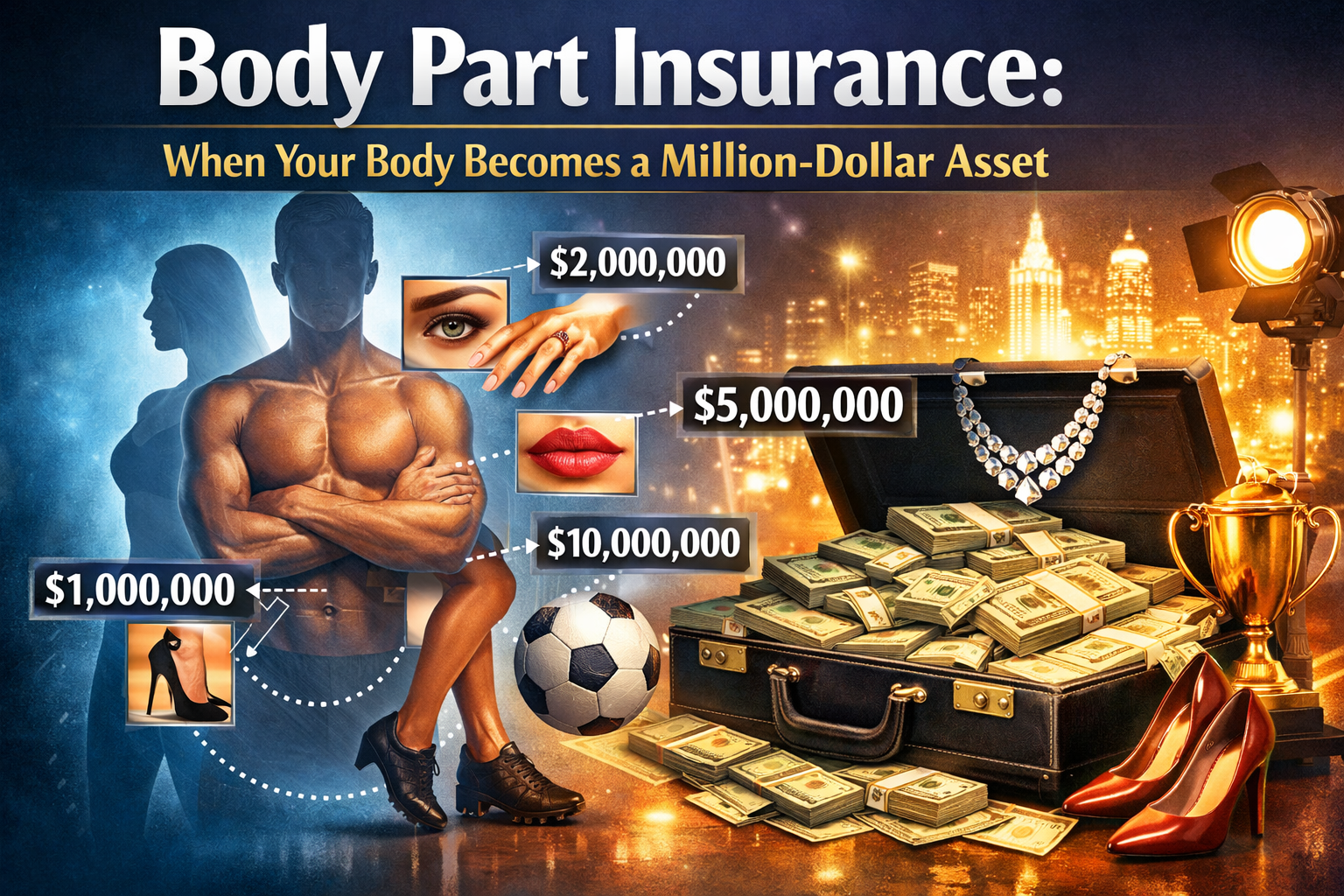
What if your lips were worth millions… or your hair… or even your taste buds? Sounds unreal, but in today’s world of celebrity branding and high-stakes careers, body part insurance is very real and getting bigger.
From Hollywood icons to athletes and even niche professionals, people are turning their physical features into protected financial assets. And the numbers? Absolutely insane.
What Is Body Part Insurance (Deeper Look)?
Body part insurance isn’t a standard policy you can just click and buy online. It usually falls under specialty insurance (often through companies like Lloyd’s of London).
Here’s how it works:
- A person identifies a body part critical to their income
- Insurers assess its value (based on earnings, brand deals, future potential)
- A policy is created to cover damage, loss, or reduced function
- If something happens → payout kicks in
It’s basically treating your body like a business asset.
How Do They Decide the Value?
This part is actually super interesting.
Insurance companies don’t just guess a number they calculate:
- Current income tied to that body part
- Future earning potential
- Market demand (how unique or recognizable it is)
- Risk level (injury chances, lifestyle, profession)
That’s how we end up with numbers like $300 million for legs 😳
More Crazy Real-Life Stories (Gets Wilder 👇)
⚽ David Beckham – The $195 Million Whole Body
David Beckham reportedly insured his entire body for around $195 MILLION.
Why? Because he wasn’t just a footballer he was a global brand. His looks, physique, and presence brought in massive endorsement deals.
🎸 Keith Richards – The $1.6 Million Hands
The legendary guitarist insured his hands for about $1.6 MILLION.
Without them? No guitar. No performances. No income. Simple.
🦵 Heidi Klum – Uneven Legs Worth Millions
Heidi Klum insured her legs—but here’s the twist:
- One leg was valued higher than the other 😭
Total value? Around $2 MILLION
Yes, even tiny differences matter at that level.
🍗 Betty Grable – The Original Million-Dollar Legs
Back in the 1940s, Betty Grable insured her legs for $1 MILLION—which today would be worth over $20+ MILLION adjusted for inflation.
She basically started the trend.
👃 Troy Polamalu – The $1 Million Hair
This one’s iconic.
Troy Polamalu insured his hair for $1 MILLION because it was part of his identity—and even featured in commercials.
👅 Rihanna – The $1 Million Legs
Rihanna reportedly insured her legs for $1 MILLION after winning a “best legs” award.
Brand deals + beauty recognition = $$$
The Weirdest Body Parts Ever Insured 🤯
This is where it gets kinda crazy:
- Taste buds → insured by professional food tasters
- Noses → perfume experts rely on them
- Beards → some celebrities have insured facial hair
- Chest hair → yes, even that has been insured 💀
- Butts → rumored in entertainment industry
Basically, if it can make money… it can be insured.
Can Normal People Do This?
Short answer: yes—but with limits
You don’t need to be a celebrity, but you do need:
- Proof that your income depends on that body part
- A high enough earning level
- A legit reason for risk coverage
Examples:
- A surgeon insuring their hands
- A dancer insuring their feet
- A YouTuber/influencer insuring their appearance
It’s rare but not impossible.
The Hidden Risks (Not All Glamorous)
This isn’t just flexing money—there are downsides too:
1. Expensive Premiums
You might pay thousands (or millions) yearly just to keep the policy active.
2. Strict Conditions
Some policies limit activities:
- No extreme sports
- No risky behavior
- Lifestyle monitoring 👀
3. Claim Challenges
Insurance companies investigate claims deeply. You can’t just say “my voice is off today” and expect millions.
The Business Side of It
This whole industry is growing because of:
- Influencer economy
- Personal branding
- Social media fame
- High-value endorsements
Today, a face or voice can be worth more than a traditional job.
So people are thinking:
“If I insure my car… why not my face?”
Future of Body Part Insurance
This is where things get even more interesting.
In the future, we might see:
- Influencers insuring their Instagram face
- Gamers insuring their hands & reaction time
- AI creators insuring their voice clones
- Virtual influencers insuring digital identity
Yeah… it’s going to get even crazier.
Final Thoughts
Body part insurance might sound like a flex, but it’s actually:
👉 Smart risk management
👉 Brand protection
👉 Financial securityIn a world where you are the product, protecting your most valuable asset just makes sense.

Breakups are messy. Emotionally, socially… and surprisingly, financially.
Now imagine this: your relationship ends, and instead of just dealing with heartbreak, you get money back.
Sounds like something out of a satire blog, but breakup insurance is a real (and growing) niche. It sits at the intersection of modern dating, financial planning, and a slightly cynical view of love.
Let’s get into it.
What Is Breakup Insurance, Really?
Breakup insurance isn’t about putting a price on your feelings. No company is handing out checks because someone left you on read for three days.
Instead, it focuses on financial damage caused by relationships ending.
Think about all the money tied into modern relationships:
- Flights booked months in advance
- Non-refundable hotel reservations
- Wedding venues and deposits
- Shared leases or furniture
Breakup insurance steps in to cover those losses when things fall apart.
So it’s less “get paid for heartbreak” and more:
“at least I’m not broke and heartbroken.”
Where It Actually Exists (And Works)
The most practical and widely used form of breakup insurance is tied to travel.
Some booking platforms and insurance add-ons allow you to cancel a trip if your relationship ends before departure. Instead of losing everything, you get a partial refund.
Real Scenario
A couple in the UK booked a luxury vacation to Santorini—flights, hotel, activities, the full romantic package. A few weeks before departure, they broke up.
Normally, that’s a total loss. Thousands gone.
But because they had a breakup-related cancellation policy, one of them was able to cancel and recover most of the cost. No awkward solo honeymoon, no begging customer support for exceptions.
It turned a financial disaster into a manageable inconvenience.
Wedding Insurance: Where Things Get Serious
If travel insurance is the casual version, wedding insurance is where things become high-stakes.
Weddings are expensive. Like, painfully expensive.
And they’re planned months, sometimes years in advance.
Real Story
In the U.S., a couple had spent over $30,000 on their wedding. Two months before the date, the engagement fell apart.
Without insurance, that money would have been mostly gone venue deposits, catering, decorations, everything locked in.
But because they had wedding insurance that included cancellation coverage, they were able to recover a large portion of the costs.
Still a breakup. Still painful. But not financially devastating.
The Wild Side: Betting on Love
Not all breakup insurance is practical or even legal.
In China, there was a bizarre trend where people could essentially “insure” celebrity relationships.
Here’s how it worked:
- You pay a small amount of money
- Choose a celebrity couple
- If they break up within a certain time, you get paid
It turned relationships into a betting market. Fans weren’t just emotionally invested—they were financially invested.
As you can imagine, regulators shut it down pretty quickly. It blurred the line between insurance and gambling, and raised some serious ethical questions.
Still, it showed something interesting:
People are willing to treat relationships like probabilities.
Everyday “Unofficial” Breakup Insurance
Even without formal policies, people create their own versions of breakup insurance.
Real-Life Examples
- Someone keeps a separate savings account “just in case” a relationship ends
- Couples split big purchases carefully instead of merging finances
- One partner keeps their old apartment lease active during the early stages of moving in
It’s not romantic, but it’s practical.
One Reddit user put it bluntly:
“I loved him, but I also loved having a backup plan.”
Why This Trend Is Growing
Breakup insurance didn’t just appear randomly. It reflects how relationships have changed.
Modern dating is faster, more expensive, and more intertwined with lifestyle.
People:
- Travel together early in relationships
- Move in faster than before
- Spend heavily on shared experiences
- Plan big events like weddings earlier
At the same time, breakups are still common.
That combination of high emotional risk plus high financial investment creates demand for protection.
It’s not about expecting failure. It’s about acknowledging reality.
The Awkward Question: Does This Kill the Romance?
There’s definitely a weird vibe to ensuring your relationship.
Some people see it as smart and responsible.
Others see it as a red flag.
Because let’s be honest bringing up breakup insurance in a relationship conversation sounds like:
“I trust you… but also I’ve read the statistics.”
That tension is what makes this topic so interesting. It sits right between logic and emotion.
The Limits of Breakup Insurance
Here’s where things get complicated.
Insurance works best when risks are:
- Random
- Measurable
- Hard to manipulate
Breakups don’t fit neatly into that.
What counts as a breakup?
What if a couple pretends to split just to claim money?
How do you verify emotional events?
Because of this, most companies avoid offering direct “breakup payouts.”
They stick to covering objective, verifiable losses like cancelled bookings or contracts.
Where This Could Be Heading
Breakup insurance is part of a larger shift toward hyper-personalized insurance.
We already insure things that would have sounded strange a decade ago:
- Pets
- Digital content
- Events
- Even parts of a person’s body in some industries
So it’s not unrealistic to imagine more relationship-related coverage in the future.
Maybe not “heartbreak insurance,” but definitely more policies tied to life events triggered by relationships.
Final Thought
Breakup insurance sounds like a joke at first.
But the more you look at it, the more it makes sense.
It doesn’t mean people believe their relationships will fail.
It just means they’ve seen enough of life to know that sometimes… things don’t go as planned.
And if you can’t protect your heart, at least you can protect your wallet.

Get Paid to Stay Alive? The Billionaire Bet on Living to 120

Body Part Insurance: When Your Body Becomes a Million-Dollar Asset

Get Paid to Break Up? Inside the World of Breakup Insurance

How Much Is Health Insurance a Month?

Will Insurance Cover Ozempic? This Information Tells You the Truth

What Does Life Insurance Cover?7 Must-Known Facts to Protect Your Loved Ones!
-
Health Insurance1 year ago
How Much Is Health Insurance a Month?
-
General Insurance1 year ago
Will Insurance Cover Ozempic? This Information Tells You the Truth
-
Life Insurance1 year ago
What Does Life Insurance Cover?7 Must-Known Facts to Protect Your Loved Ones!
-
 Auto Insurance1 year ago
Why Is My Auto Insurance So High? There Is a Secret Behind High Auto Insurance Costs That Goes Unknown
-
General Insurance4 months ago
Can Cowboys Get Life Insurance?
-
 Life Insurance1 year ago
What Is Life Insurance? Everything You Need to Know!
-

 Health Insurance3 months ago
Prima Car Insurance Reviews: Is It the Right Choice for Your Ride?
-

 Health Insurance3 months ago
Mobility Scooter Insurance: What It Is, Why You Need It, and How to Choose the Best Policy